As an Amazon Associate I earn from qualifying purchases.
Noise nights are lost or won before the first bang. The owners whose dogs get through fireworks and thunderstorms with the least damage are not the ones with the most gear, they are the ones who started hours earlier: dog walked and fed, safe room built, wrap fitted while everyone was still calm, doors and gates checked twice. This playbook lays out the whole event night in order, from the morning of a forecast storm to the quiet hour after it passes, with the calming shirt in its proper place, one useful layer inside a routine that veterinary guidance actually supports. Follow the sequence and you give your dog the best version of a hard night.
Building your storm kit?
Start with the roundup of the best calming shirts for dogs and our evidence check asking does the ThunderShirt actually work, then come back here for the night itself.
Key Takeaways
- Preparation beats reaction. A wrap fitted during a panic gets associated with the panic, so everything goes on and gets set up while the dog is still calm.
- The safe room does most of the work: interior space, covered den, layered background sound, water, and a familiar-smelling blanket.
- Fit the calming shirt snug with the two-finger check, and add ear coverage for noise-specific fear where it helps.
- Escape prevention is a safety task, not a comfort task. Check doors, gates, collar fit, and ID before the noise starts.
- Dogs who panic to the point of injury, destruction, or escape attempts need a veterinarian in the plan, and prescription options exist for noise aversion specifically.
Table of Contents
- Know your dog’s version of a noise night
- Days before, set up the safe room
- Hours before, spend energy and set the stage
- The shirt goes on early, and here is how
- During the event, your job is boring
- Escape-proofing, the unglamorous safety layer
- After it passes, close the night properly
- When the playbook is not enough
Know your dog’s version of a noise night
No two dogs panic the same way, and the playbook bends around the dog in front of you. Some dogs tremble and glue themselves to a person. Some pace a fixed circuit of the house. Some head for the smallest enclosed space they can find, a bathtub, a closet, the gap behind a toilet. Cornell’s Riney Canine Health Center, in its guidance on sound sensitivities, lists the familiar signs, trembling, panting, pacing, drooling, hiding, and seeking out the owner, and notes that dogs with noise phobias often carry some separation anxiety as well, which is why being home matters. The Merck Veterinary Manual adds the clinical frame: loud, unpredictable noises such as thunderstorms and fireworks are among the most common phobia triggers, and a dog frightened by one noise often starts reacting to related sounds, rain on the roof, wind, even pressure changes before a storm.
Write down what your dog actually did during the last event, where he went, what he refused, how long recovery took. That short record tells you whether your dog is a hider who needs a better den, a clinger who needs a person stationed nearby, or a pacer who needs a safe circuit and something to do. It also gives your veterinarian something concrete to work with if the nights are getting worse instead of better, which matters because noise fear tends to sensitize over time rather than fade. Our category guide to anxiety clothing for dogs covers the garment side of that record, and the overview of anti anxiety shirts for dogs helps you judge where a shirt belongs in your particular dog’s picture.
Days before, set up the safe room
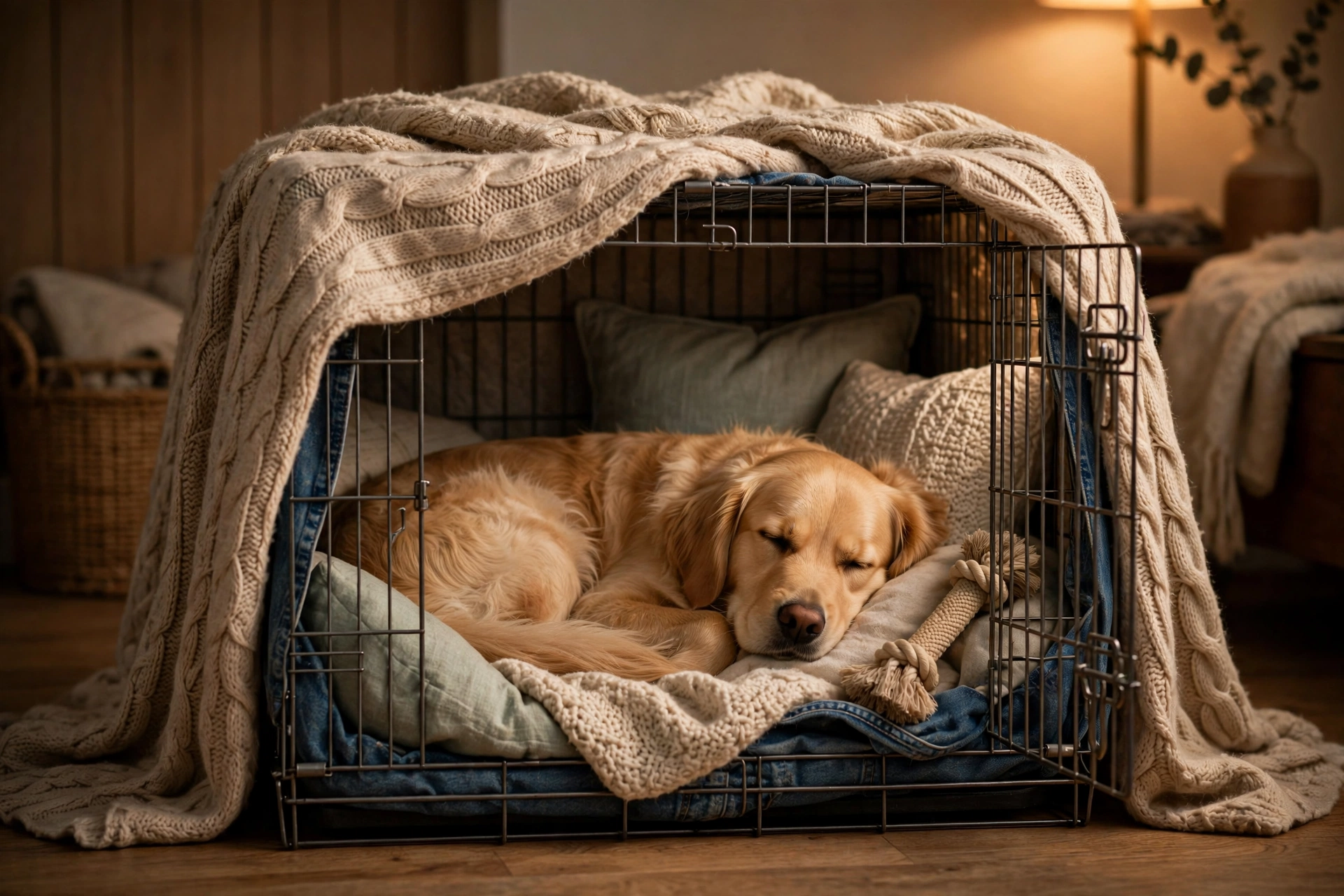
Build the refuge when nothing is wrong. Pick the most interior room you have, ideally with few or no windows, and make it the dog’s good place in advance: bed or covered crate, water, a blanket that smells like the household, and a way to play sound. The ASPCA advises keeping dogs in a safe, escape-proof room during fireworks with soft music or background noise playing, and the RSPCA recommends the same architecture, a den built ahead of time so the dog already trusts it before the night arrives. A covered crate works beautifully for a crate-trained dog because the blanket over the top cuts both sound and flashing light, but never shut a panicking dog into a crate he has not chosen, because a trapped, frightened dog can injure himself on the door.
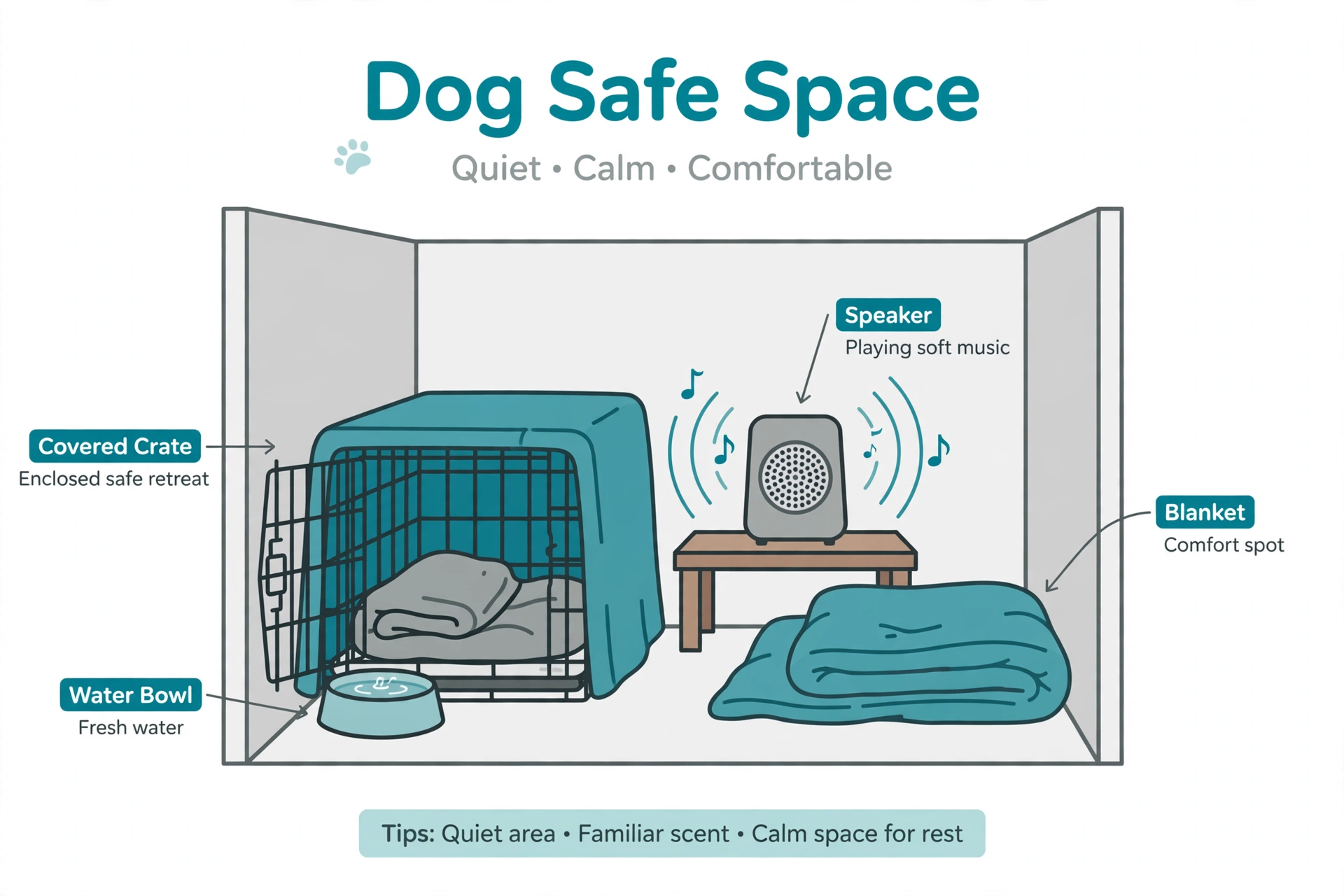
Sound masking deserves its own sentence because owners underestimate it. Cornell’s guidance on sound sensitivities suggests layering two types of sound, such as white noise and calm music, to blunt the frightening noise, and placing the source near the dog’s refuge rather than across the house. Feed a few ordinary evenings in that room, scatter treats in the den, and let the dog nap there on quiet nights, so the room’s meaning is settled long before it has to do its real job. If your dog’s chosen bolt-hole is the bathroom or a closet, do not argue: stock that space instead. The dog picks the den. You just furnish it.
Hours before, spend energy and set the stage
The afternoon of a forecast storm is a work shift. Walk the dog properly, with sniffing time, well before the weather or the first fireworks, because a dog who has exercised and emptied out starts the evening with a lower baseline. Cornell’s sound sensitivities guidance makes the scheduling point directly: plan bathroom breaks and exercise to happen before the fireworks start, and give any prescribed anti-anxiety medication early enough to be working before the noise. Feed dinner a little earlier than usual too, since a panicking dog will not eat and a hungry dog has one more reason to be restless. Then close the house down in a deliberate pass: windows shut, curtains drawn against flashes, doors and gates latched, and the dog inside for the night.
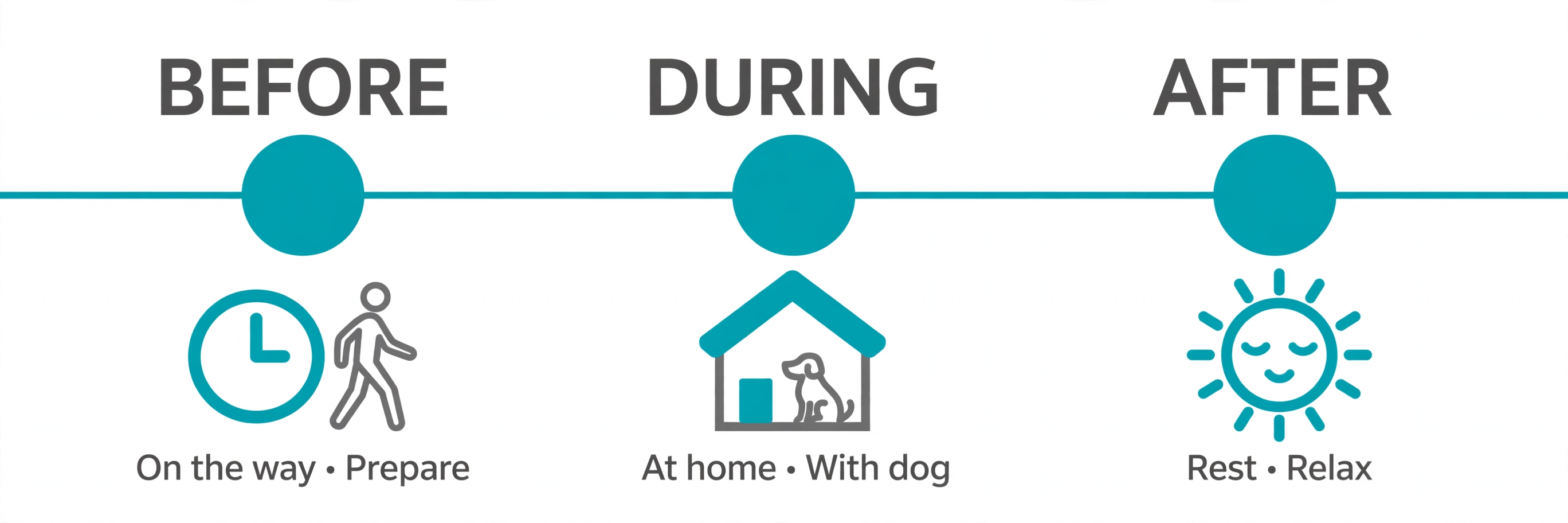
This is also the moment for the long-lasting chew or stuffed food toy Cornell recommends keeping ready, produced when the event starts rather than as an afternoon snack, so it still has novelty working for it. Set the safe room’s sound going before the first rumble, not after, because a suddenly loud television in a silent house is its own startling event. VCA Hospitals emphasizes that event-day medication only helps if it is absorbed and active before panic sets in, usually at least an hour ahead, which is the same logic that governs everything in this section: the whole playbook runs ahead of the noise, never behind it.
The shirt goes on early, and here is how
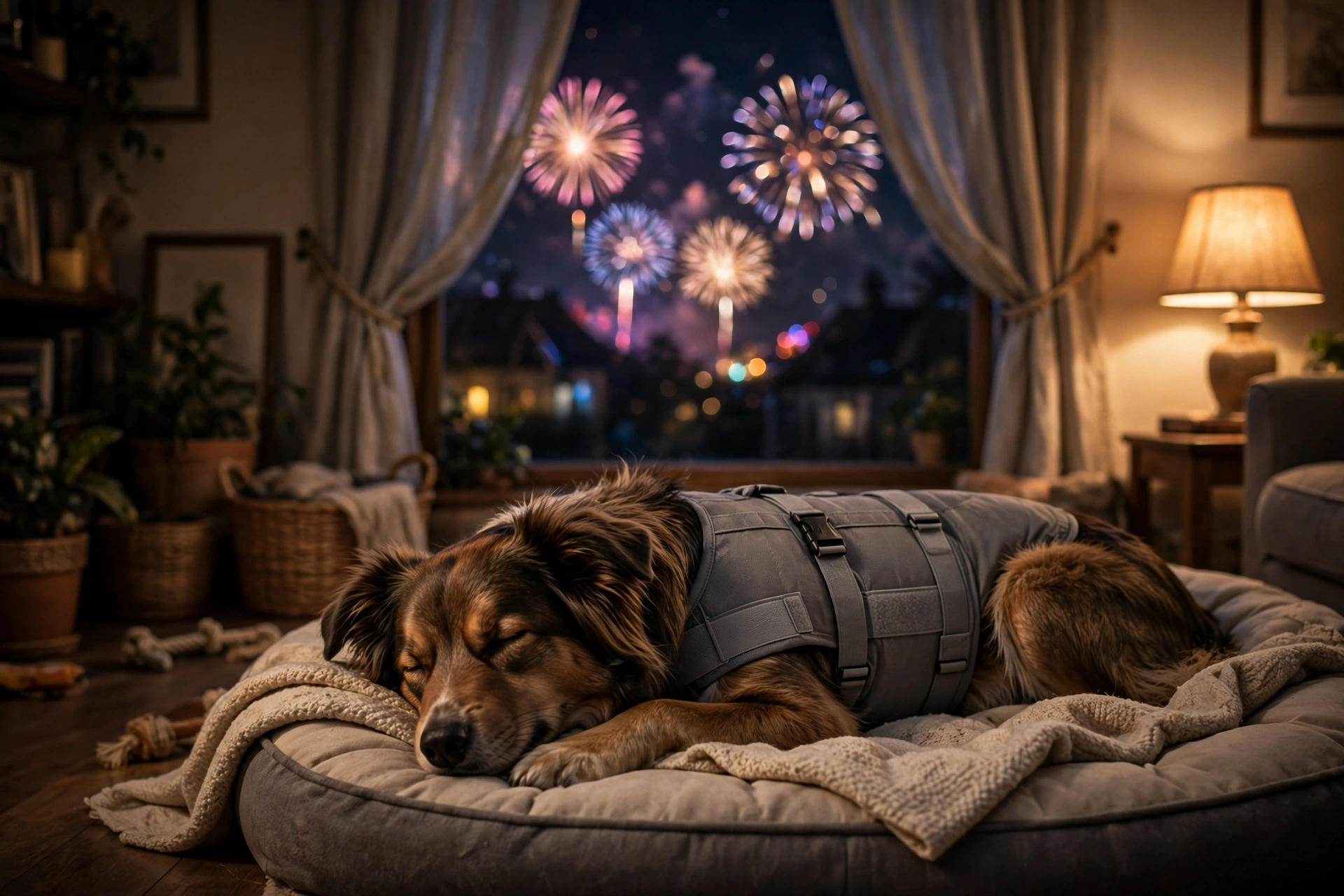
The calming shirt is a before item, not a during item. Fit it in the quiet hours, fasten it snug with two fingers sliding underneath at the chest and belly, and let the dog wear it through an ordinary evening first if he has never worn one on a noise night. A wrap grabbed in a scramble while thunder is already cracking teaches the dog that the garment predicts the scary thing, which is the opposite of the association you want. PetMD describes pressure vests as a low-risk aid that may provide relief during thunderstorms and fireworks, with the honest caveat that the research is limited and inconclusive, and that fit standard, snug but never restrictive, is the one to use on the night.

For dogs whose fear is mostly about sound itself, ear coverage is the natural partner to torso pressure. A soft calming band over the ears muffles the sharp end of fireworks and thunder, and it doubles as the grooming and drying aid it was originally designed as. The Happy Hoodie below is the long-running original of that idea, inexpensive enough to keep in the storm kit permanently. Use it on its own for a dog who tolerates headgear but hates vests, or layered with the wrap for the dog who needs every layer you have.

One more garment note for the last bathroom break before the noise: a sport-cut wrap with reflective trim is easier to spot in a dark yard and stays put on a dog who is already scanning the sky. Keep that final outing short, on a leash even in a fenced yard, and come straight back in. Our notes on calming dog shirts for summer cover breathability for warm storm nights, and the comparison in Thunder Shirt vs calming shirt explains the design differences if you are choosing between wrap styles before the season starts.

During the event, your job is boring
Stay, be dull, and let the dog choose the distance. Cornell’s guidance on sound sensitivities puts staying home to comfort the dog at the top of its list, because your presence is the strongest safety signal most dogs have. Sit where the dog wants you, keep your voice and movements ordinary, and offer the chew, a game, or quiet contact on the dog’s terms. Comforting a frightened dog does not reward the fear; fear is an emotion, not a behavior you are training, and the ASPCA makes the parallel point for anxious behavior generally, that distress calls for management and kindness, never punishment. VCA Hospitals is blunt about the flip side: never scold or punish a dog during a noise event, because punishment only confirms to the dog that there is something to fear.
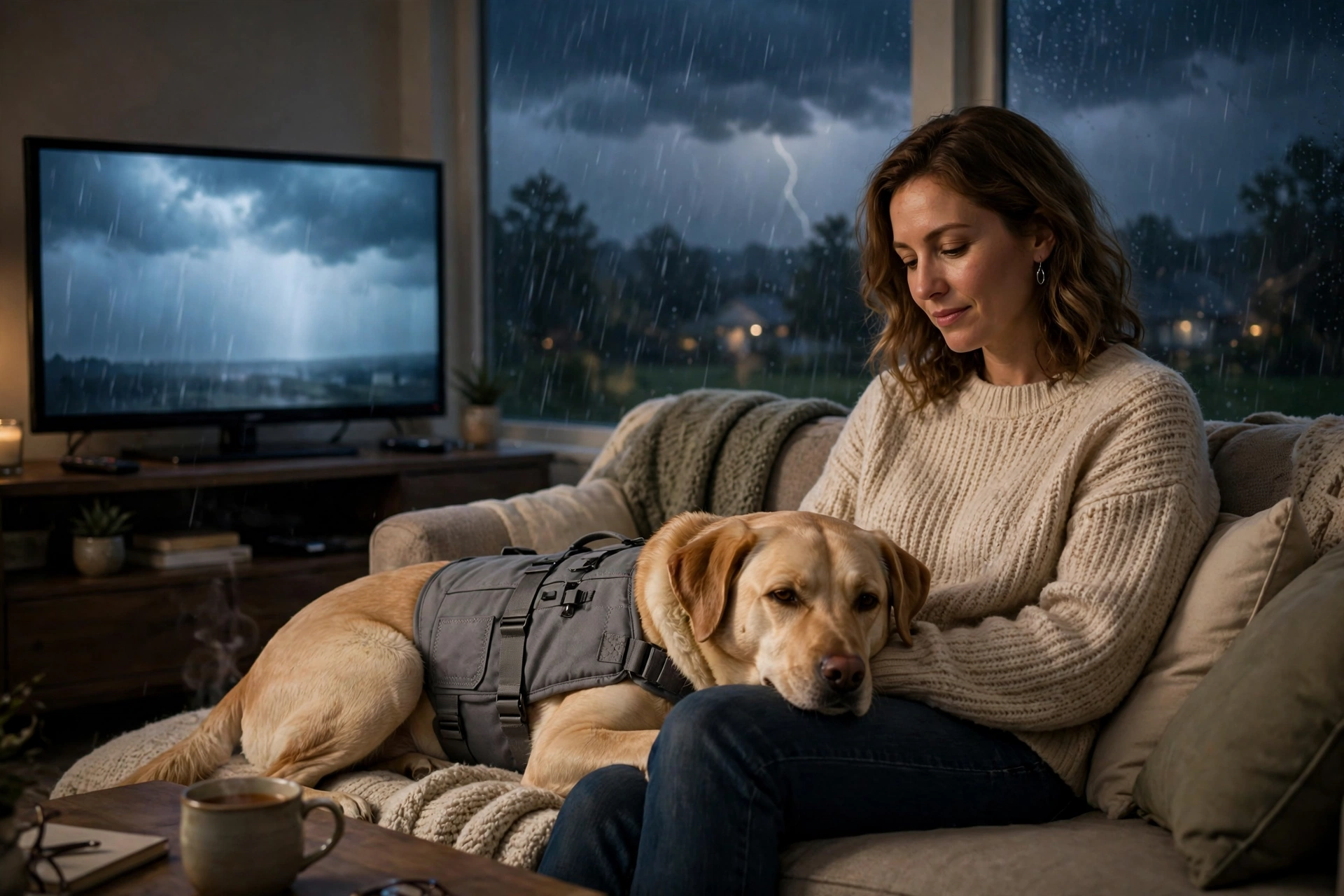
Keep the sound masking running, keep lights low and steady, and resist the urge to keep checking the dog with anxious attention of your own. If the dog wants to hide, let him hide; dragging a dog out of a chosen bolt-hole to reassure him serves the human, not the dog. If the dog wants contact, give it calmly. Recheck the wrap once mid-event, since pacing dogs can work panels loose, and confirm breathing looks easy and the fabric has not bunched at the neck. The American Kennel Club notes that anxiety treatment works best as a combination of strategies rather than a single fix, and an event night is exactly that combination in miniature: environment, routine, garment, and a calm human, all at once.
Escape-proofing, the unglamorous safety layer
More dogs are lost on fireworks nights than on any ordinary night of the year, and the reason is panic, not disobedience. The RSPCA advises keeping pets indoors when fireworks are expected and making sure doors, windows, and cat flaps are secured, and Cornell’s sound sensitivities guidance adds the paperwork layer: ID collar details and microchip information current and accurate, because a dog who does get out is found through them. Check collar fit with the same two fingers you used on the wrap, since a loose collar is how a lunging dog becomes a loose dog. Then walk the perimeter like an inspector: gates latched, fence gaps blocked, the door to the street on a handle the dog cannot lever.
Sometimes the safest plan is not home at all. If your street hosts the neighborhood display and your dog is a known escape artist, a night with a trusted sitter in a quieter area, or a professional ride to one, beats a heroic stand in the loudest house on the block. For an anxious dog who must travel on a loud night, the preparation overlaps with car anxiety work: our friends at Pets Go Taxi lay out the transport side in their guide to dog car anxiety, and the same principles, a settled dog, a secure carrier or harness, and no surprises, apply. Whatever the venue, the dog’s night is planned before the sky lights up, never improvised during it.
After it passes, close the night properly
The hour after the last bang is part of the event. Dogs do not reset when the noise stops; the Merck Veterinary Manual describes how phobic dogs can stay aroused long after a trigger ends and begin anticipating the next one from early cues. Keep the safe room and its sound running for a while, take the wrap off once the dog’s breathing and posture are back to normal, and offer water and a short, calm leash break in the yard once you are sure the noise is finished, because neighborhood fireworks have a habit of one last volley. Then let the dog sleep. A tired, wrung-out dog the next morning is normal; a dog who will not eat, cannot settle, or injured himself in the night is a veterinary call.
Write the debrief while it is fresh, three lines in a notebook: what time the dog settled, what helped, what did not. That record is gold for the next event and for your veterinarian, and it turns one bad night into a better plan. If the wrap clearly helped, note the fit you used. If the dog froze in it or fought it, that is a result too, and our honest evidence review in does the ThunderShirt actually work explains why responses vary so much between dogs. Between seasons is when the real training happens: VCA Hospitals recommends starting desensitization and counterconditioning at a time of year when storms and fireworks are unlikely, so the dog learns at a volume life does not control.
One last habit separates good nights from great ones: rehearse the routine on an ordinary evening once in a while. Walk the dog, build the room, fit the shirt, run the sound, and then take everything down and have a normal night. A playbook the dog has lived through in peacetime holds together under fire, and a routine that only ever appears alongside thunder teaches the dog to fear the routine itself. Two or three calm rehearsals a season cost you an hour each and buy you a dog who walks into his den on the loud night like it is any other room in the house.
When the playbook is not enough
Some nights are medical, and recognizing them is part of the playbook. Book the veterinary conversation when your dog injures himself, destroys doors or crates, drools and pants for hours, soils the house only during noise, or is getting worse season over season. The American Kennel Club advises that a veterinarian should identify the type of anxiety and rule out medical causes before any treatment plan, and Cornell’s Behavior Medicine service exists for the cases that need a specialist workup. Medication is not a failure of the natural approach; for noise aversion specifically, the FDA approval summary for Sileo documents a prescription gel approved for exactly this condition, and PetMD explains how vets use it around predictable events.
The garment still has a place in those harder cases, as one layer among several, which is why the appraisal in Veterinary Evidence frames pressure vests as possibly small but real benefits rather than nothing. What changes with severity is the center of gravity: the plan belongs to your veterinarian and, where needed, a behaviorist, with the wrap, the room, and the routine supporting it. A dog who is suffering deserves the full ladder, not a stronger opinion about shirts. Start the conversation in the quiet season, trial any medication on a calm day as the ASPCA style guidance implies with its plan-ahead emphasis, and arrive at the next fireworks night with a tested plan instead of a hopeful one.
Our view: the event night is a logistics problem with a frightened dog at the center of it. The owners who do it well treat it like one: room built early, energy spent, shirt fitted before the sky changes, doors checked like a pilot’s checklist, and a boring, steady human on duty until it ends. The calming shirt earns its place in that routine, but the routine is the real product. Build the routine once, write it down, and every storm after the first gets a little less bad.
Frequently Asked Questions
When should I put the calming shirt on before fireworks?
At least an hour before the expected noise, and earlier if your dog starts reacting to setup sounds, distant test bangs, or the neighborhood getting loud. The garment should already be a familiar, boring object by the time the event starts, which is why a calm-day fitting session earlier in the week matters.
Can I leave my dog alone in the safe room during fireworks?
It is far better to stay. Dogs with noise phobia often have a separation component, and your presence is part of the treatment. If you genuinely cannot be home, arrange a sitter the dog knows rather than leaving the dog to ride out the loudest night of the year alone.
Should I comfort my dog or ignore the fear?
Comfort calmly. Fear is an emotion, not a behavior you can reinforce into growing, and a steady hand and an ordinary voice help most dogs. What does not help is frantic fussing, punishment, or dragging the dog out of a hiding place he chose.
What if my dog panics even with the wrap and the safe room?
That is the signal to involve your veterinarian before the next event. Prescription options exist for noise aversion, and a behavior plan built in the quiet season can lower the ceiling on the panic. Keep using the room and routine in the meantime; they support the medical plan, they do not compete with it.
Is a thunderstorm night different from a fireworks night?
Mostly in predictability. Storms arrive with pressure changes, rain, and wind that sensitive dogs read hours ahead, so the playbook starts earlier and the dog may be unsettled before any thunder. Fireworks are louder and sharper but scheduled, which makes them easier to plan around to the minute.
Planning the season, not just the night?
Browse the full Dog Anxiety and Calming guides for fit, sizing, and product comparisons, or return to The Pet Shirts for both lanes of the site.
Sources
- ASPCA, Fourth of July Safety Tips
- RSPCA, Fireworks Advice
- Cornell Riney Canine Health Center, Sound Sensitivities
- VCA Hospitals, Helping Dogs with Severe Phobias
- Merck Veterinary Manual, Behavior Problems of Dogs
- American Kennel Club, Anxiety in Dogs
- PetMD, Calming Aids for Dogs
- PetMD, Sileo for Dogs
- FDA, Sileo Freedom of Information Summary
- ASPCA, Separation Anxiety
- Cornell University, Behavior Medicine Service
- Veterinary Evidence, pressure vest knowledge summary