As an Amazon Associate I earn from qualifying purchases.
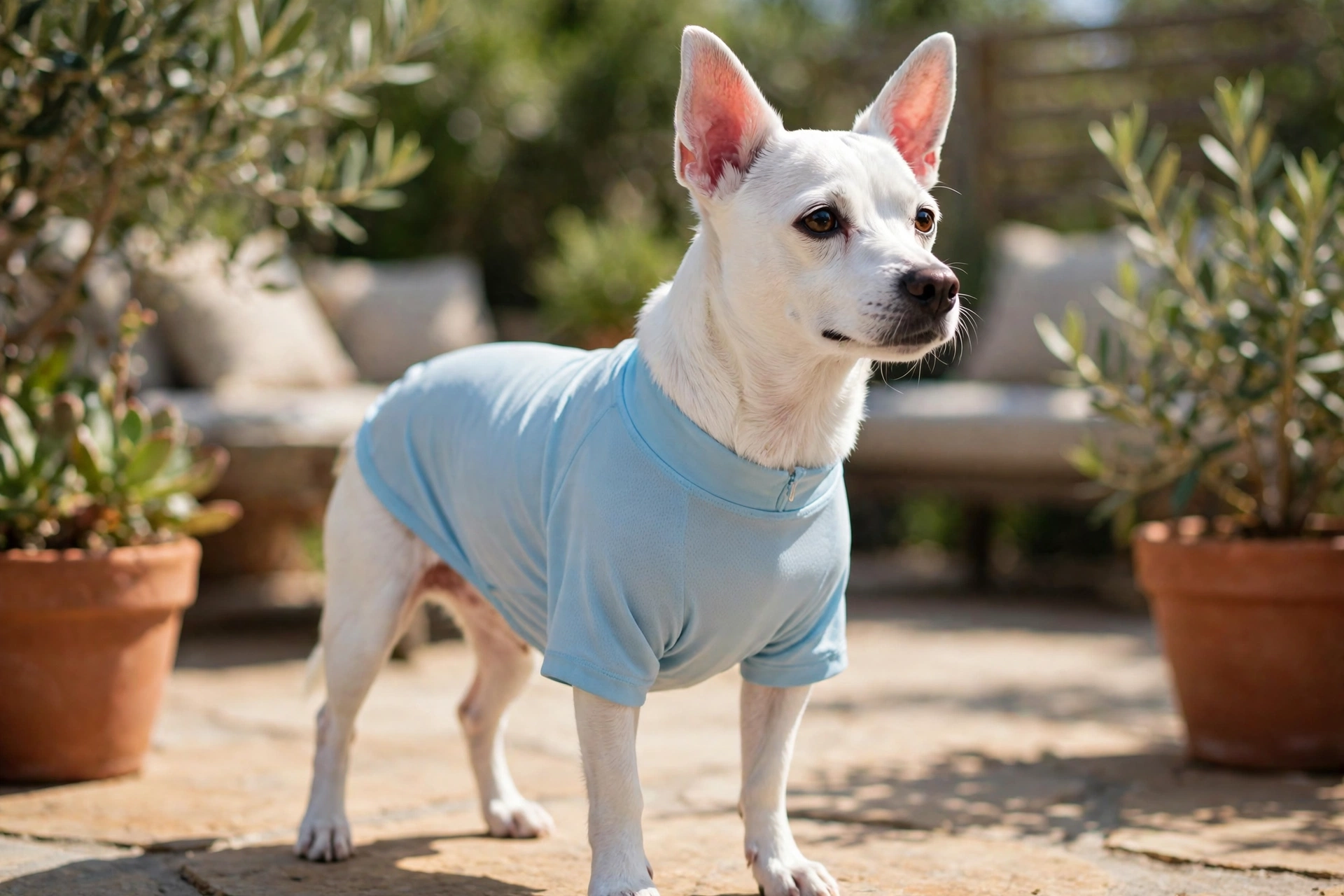
A white belly that turns pink after a morning in the yard, ears that feel hot and tender by evening, a nose that flakes after a weekend hike. Light-coated and hairless dogs do not have the built-in cover that a thick, dark coat provides, so the same sunshine that feels pleasant to you can quietly burn them. A UV protection shirt is not a fashion extra for these dogs. It is a practical layer that covers the back, sides and belly where fur is thinnest, stays in place when sunscreen gets licked or rubbed off, and lets a sensitive dog stay outside more comfortably, provided the fit is right and the fabric does not trap heat.
Browse dog gear and recovery guides
Key Takeaways
- White, light-coated, hairless and recently shaved dogs burn fastest, especially on the belly, ears, nose and groin.
- UPF describes how much ultraviolet light a fabric blocks. Higher numbers block more, but fit and coverage matter just as much.
- A sun shirt must stay breathable. If a dog pants harder, seeks shade or slows down in it, the shirt is too hot or too tight.
- Sunscreen made for dogs still helps on exposed skin a shirt cannot cover, such as the nose and ear tips.
- Shade, timing and rest are still the first line of protection. A shirt adds cover, it does not replace common sense.
Table of Contents
- Which Dogs Burn and Where the Skin Is Exposed
- How UPF Ratings on Dog Shirts Work
- Fit and Heat Tradeoffs Every Owner Has to Balance
- The Wet Shirt Cooling Bonus and Its Limits
- When to Skip the Shirt and Use Shade and Timing Instead
- Care, Washing and Why UPF Protection Fades
- Putting a Sun Plan Together for a Sensitive Dog
- Our view
- Frequently Asked Questions
- Sources
- Recommended
Which Dogs Burn and Where the Skin Is Exposed
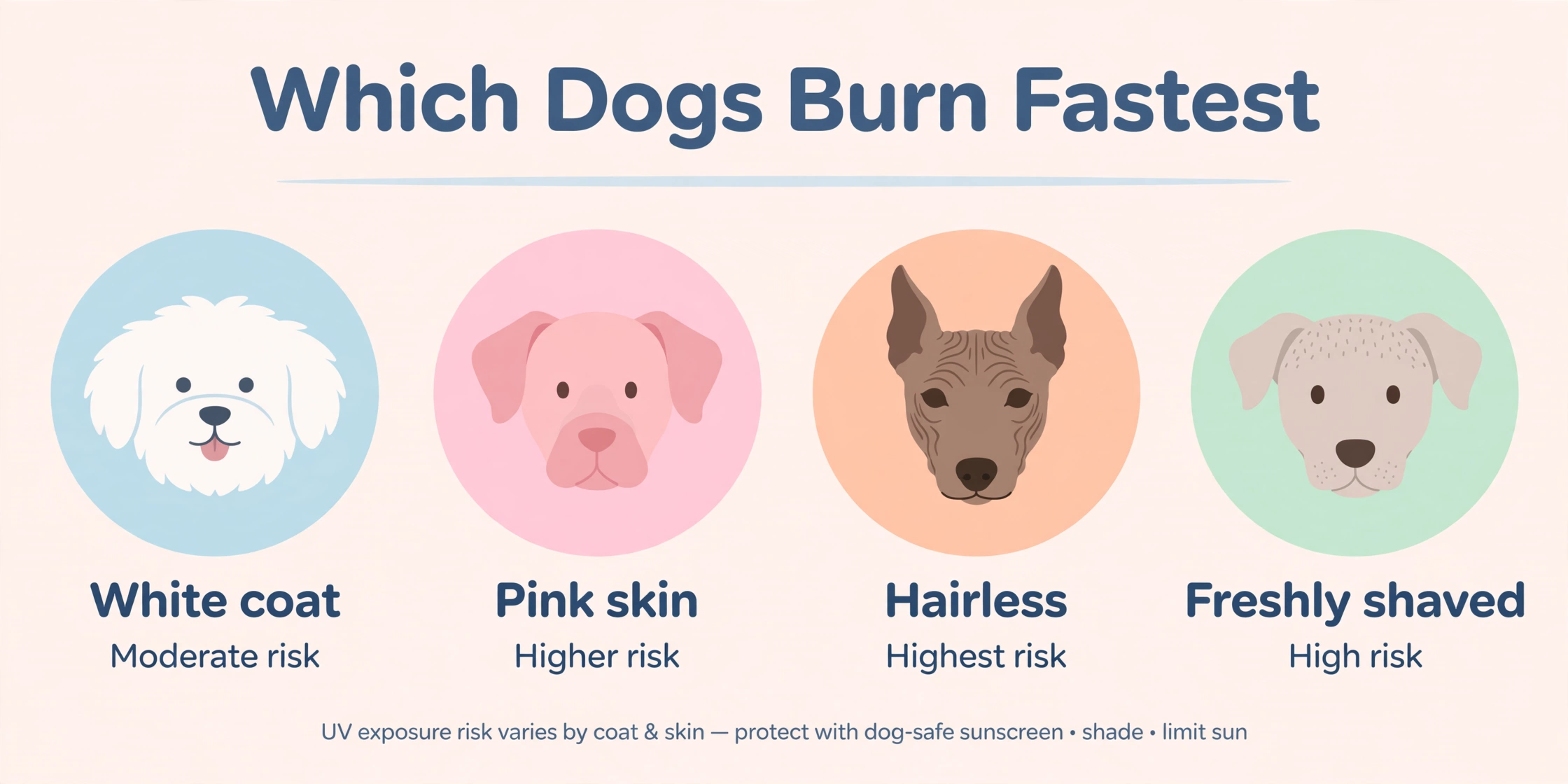
Some dogs burn in minutes, not hours. The pattern is consistent across veterinary guidance. Dogs with white or light-colored coats, pink skin underneath, thin fur, or almost no fur at all have far less natural protection than a dog with a dense, dark double coat. PetMD makes the basic point plainly in its overview noting that dogs can get sunburned, and that thin and light-colored fur raises the risk. That risk is not evenly spread across the body. The belly and groin have sparse hair and pale skin, the ears are thin and stick out into the light, the nose and the skin around the eyes have little cover, and the back is exposed whenever a dog lies on its side and sunbathes, which many light-coated dogs love to do until the skin pays for it.
Hairless and nearly hairless breeds sit at the top of the risk list for an obvious reason. A Chinese Crested, a Xoloitzcuintli, or any dog with large patches of bare skin is essentially walking outside without the layer other dogs rely on. The same concern applies to dogs who have been shaved for summer, clipped short for a medical procedure, or thinned by allergies or age. Owners sometimes shave a dog thinking it will help with heat, yet the coat itself was doing quiet work as shade for the skin. The ASPCA warns against removing that protection in its hot weather safety tips, noting that coat layers help protect against both overheating and sunburn. A trim is one thing. A close shave on a pale dog heading into bright sun is quite another, and it is one of the most common ways a dog who never burned before suddenly does.
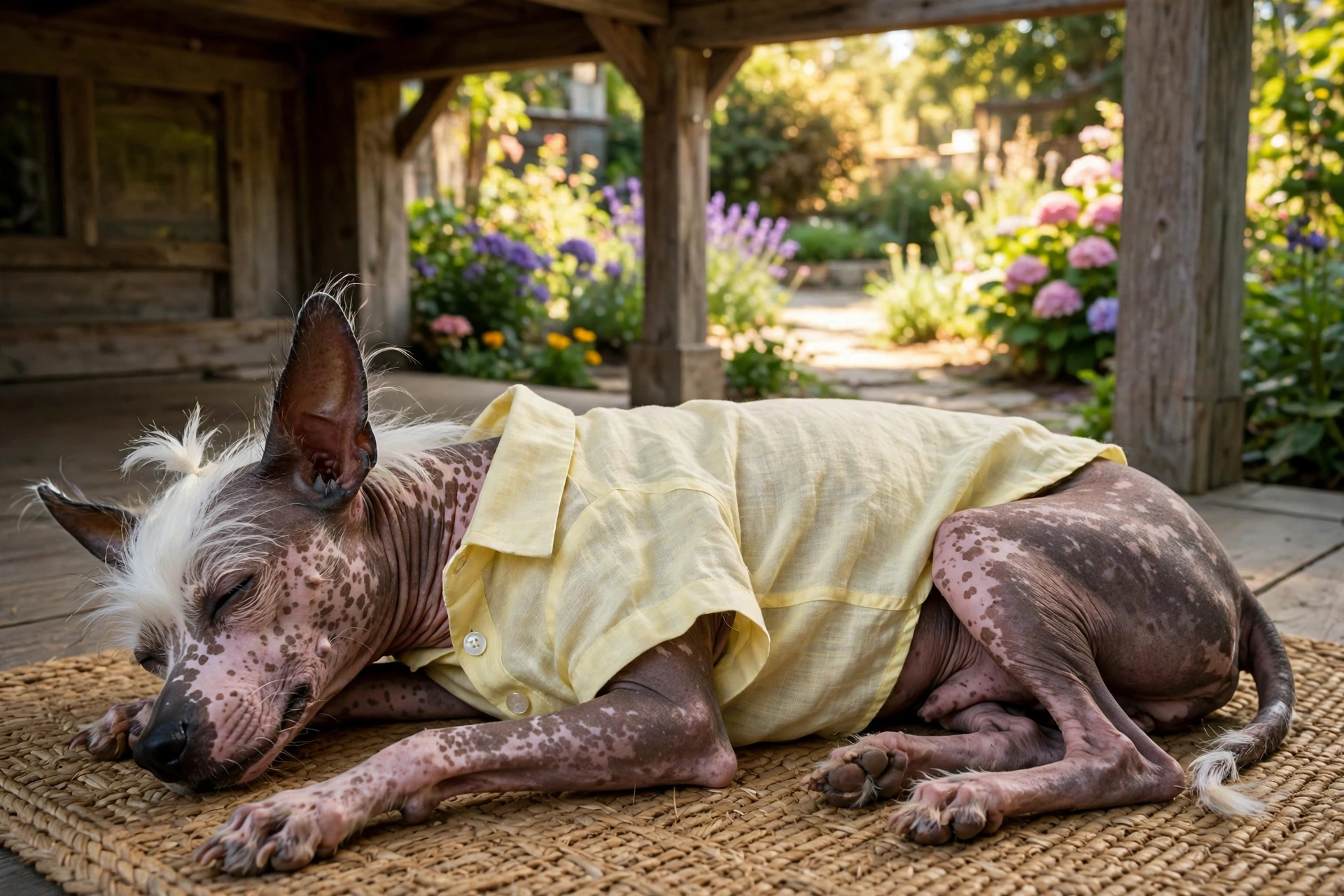
Repeated exposure matters as much as a single bad afternoon. VCA Hospitals describes solar dermatitis in dogs as a condition that often starts like ordinary sunburn, with redness and dryness, and can progress to crusted, ulcerated skin on the flanks, groin, armpits, nose, eyelids and sides of the trunk. In some cases damaged skin can develop more serious growths at the same site, which is why veterinarians treat chronic sun damage as more than a cosmetic problem. Zoetis Petcare makes a similar prevention point in its guide to protect your dog from sunburn, listing the ear tips, nose, eyelids, lips, tail tip and belly as the places owners should check first. If your dog already wears a garment for another reason, the fit lessons carry over. Guides such as calming dog shirts for summer and how tight a calming shirt should be show why a shirt that gaps at the belly or rides up at the neck leaves exactly the skin you meant to cover exposed to the light.
The nose deserves special attention because shirts do not cover it. Merck Veterinary Manual discusses nasal solar dermatitis as a condition affecting nonpigmented areas around the nostrils, sometimes spreading to the bridge of the nose, and notes that not every crusty or inflamed nose is simple sunburn. Lupus and other conditions can look similar and can also worsen in summer. That distinction matters for how you use this guide. A shirt, shade and dog-safe sunscreen are sensible prevention for a healthy, sun-sensitive dog. A nose or patch of skin that is ulcerated, bleeding, rapidly changing, or not healing needs a veterinarian, not a stronger shirt. Prevention works best when it starts before damage, and it works honestly only when owners know where its limits are.
| Option | What it covers | Strengths | Limits |
|---|---|---|---|
| UPF-rated shirt fabric | Back, sides, chest and, on longer styles, much of the belly | Stays in place, nothing to lick off, works while the dog moves, swims or rolls | Leaves nose, ears and paws exposed, can trap heat if the fabric or fit is wrong |
| Shade | Whole dog, while the dog stays in it | Cools as well as covers, no product needed, best first step on any hot day | Reflected light still reaches skin, and many dogs wander back into the sun |
| Sunscreen made for dogs | Nose, ear tips, belly and other bare spots a shirt misses | Reaches small exposed areas, useful alongside a shirt rather than instead of one | Needs reapplication, can be licked off, and human products can contain ingredients unsafe for dogs |
| Longer shirt or rash-guard style coverage | Torso plus more of the belly, groin edge and upper legs on some styles | Best torso coverage for sunbathing dogs who expose the belly | More fabric means more heat and more chances to rub, so fit checks matter more |
How UPF Ratings on Dog Shirts Work
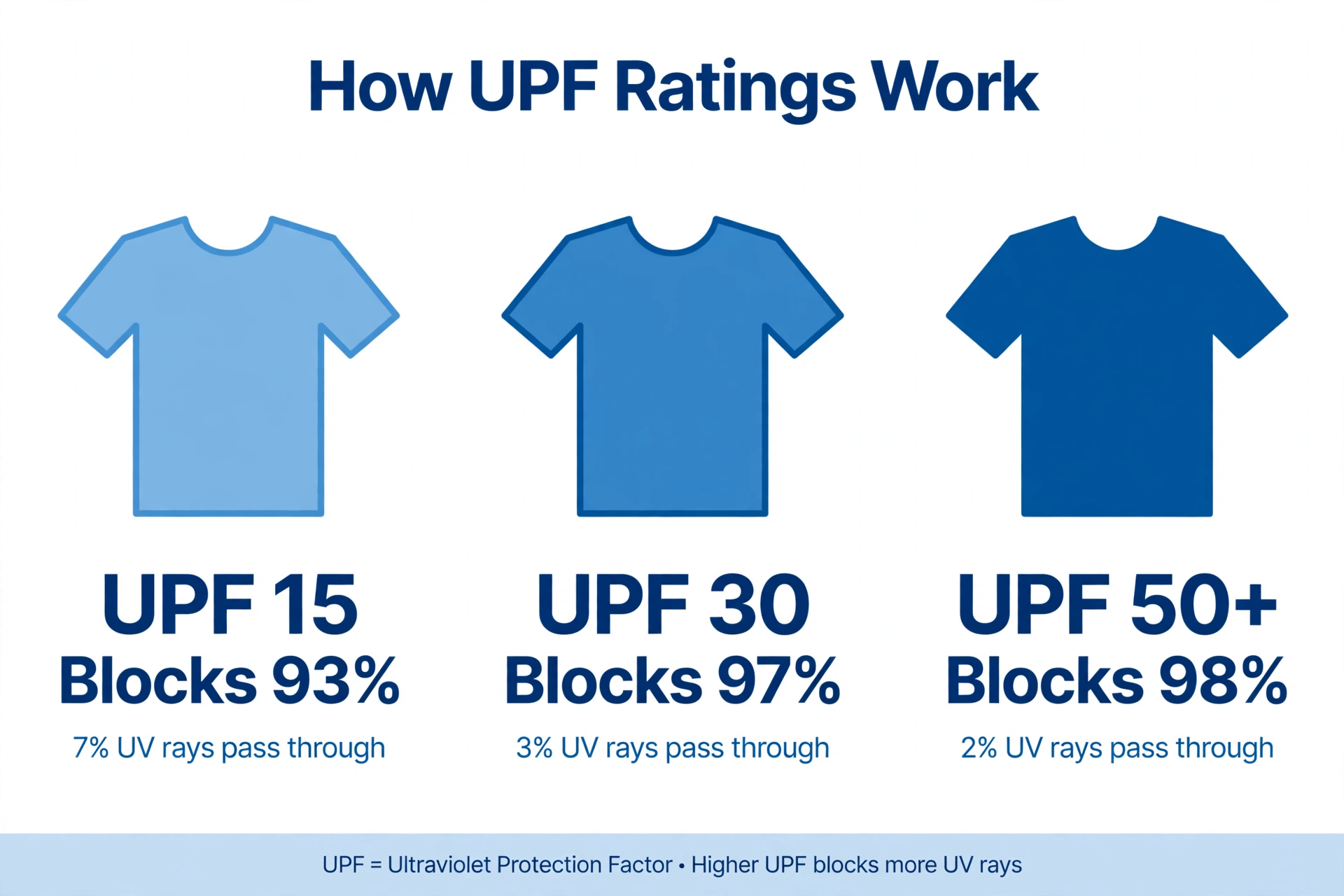
UPF is a fabric rating, not a promise about the whole dog. Ultraviolet Protection Factor describes how much ultraviolet radiation passes through a fabric to the skin underneath. A higher UPF number means less UV reaches the skin when the fabric is new, dry, unstretched and worn as intended. The Skin Cancer Foundation explains the general principle in its overview of sun protective clothing explained, where weave, coverage and condition all affect how protective a garment really is. Those same variables apply to a dog shirt. A tight weave blocks more than a loose, open knit. A darker or more saturated fabric often blocks more than a pale, thin one. A shirt stretched tightly over a broad chest lets more light through than the same shirt sitting at its natural size, because stretching opens the weave.
That is why chasing the highest number on a label is only part of the decision. Coverage is the other part, and for dogs it is often the bigger part. A high-rated shirt that ends high on the ribs does little for a pale belly. A slightly lower-rated shirt with a longer body, a chest panel that actually wraps underneath, and a neckline that covers the shoulders may protect more real skin over a real afternoon. Think about how your dog spends time outside. A dog who walks in the morning and rests in shade needs a different balance than a dog who flops onto warm pavement or grass and sleeps belly-up at midday. The second dog needs belly coverage most of all, and that need should drive the style you choose, much as it does when owners compare the best dog recovery suits after surgery for torso coverage or work through Thundershirt versus a regular dog shirt to understand what a garment does and does not cover.
Sunscreen still has a job alongside the shirt. The American Kennel Club sets out practical dog sunscreen guidance emphasizing products made for dogs and warning against ingredients that can harm a dog who licks them, including zinc oxide and certain other compounds found in human formulas. Use that kind of product on the nose, ear tips and any bare patch the shirt cannot reach, apply it before you go out, and reapply after swimming or heavy rubbing. Do not treat the shirt and the sunscreen as rivals. The shirt is the reliable base layer for the torso. Sunscreen is the detail work for the exposed edges. Together they cover more skin, more consistently, than either one manages alone on an active dog who rolls, shakes and rubs against furniture and grass.
For a first purchase, a dedicated UPF sun shirt is the clearest starting point. Look for a stated UPF rating, a lightweight knit, flat seams, and a body long enough to cover the ribcage and belly line of your dog without dragging or twisting.

Owners who hike will recognize the tradeoff from trail gear. The same dog who needs cover on an exposed ridge also needs airflow on the climb, which is why the advice in the best pet shirts for hiking and dog shirts for hiking for small dogs keeps returning to weight, breathability and freedom at the shoulders. A sun shirt should follow that logic. If it restricts the stride, twists when the dog turns, or bunches behind the front legs, the dog will fight it, scratch at it, and end up with rubbed skin in place of burned skin. Neither outcome is protection.
Fit and Heat Tradeoffs Every Owner Has to Balance
A sun shirt that overheats a dog has failed at its job. This is the central tradeoff, and it deserves more honesty than most product pages give it. Dogs cool themselves mainly by panting, and they have limited ability to shed heat through the skin. Adding a layer, even a thin one, changes how air moves across the coat and how quickly a dog warms up during exercise. Cornell University College of Veterinary Medicine lays out the danger in its summer heat safety tips, describing heatstroke as a life-threatening emergency linked to hot or humid conditions and strenuous exercise, with heavy panting, drooling, weakness and confusion among the warning signs. A shirt is never worth that risk. Sunburn is painful and, over time, damaging. Heatstroke can kill on the day it happens.
Fit is where the balance is won or lost. The shirt should lie close enough that it does not flap, catch or twist, and loose enough that you can slide two fingers under the chest and neck without forcing them. Check the armpits after the first few wears, because that is where a slightly small shirt rubs first. Check the belly panel on male dogs to be sure nothing presses or interferes when the dog urinates. Watch the dog move at a walk and a trot, sit, lie down and shake. A good fit disappears into normal movement. A poor fit announces itself in every posture. Owners who have fitted anxiety garments already know this checking routine from guides on dog shirts for fireworks and thunderstorms and from the comparison in the best calming shirts for dogs, where even pressure is the goal for a different reason but the rub points and sizing mistakes are exactly the same.
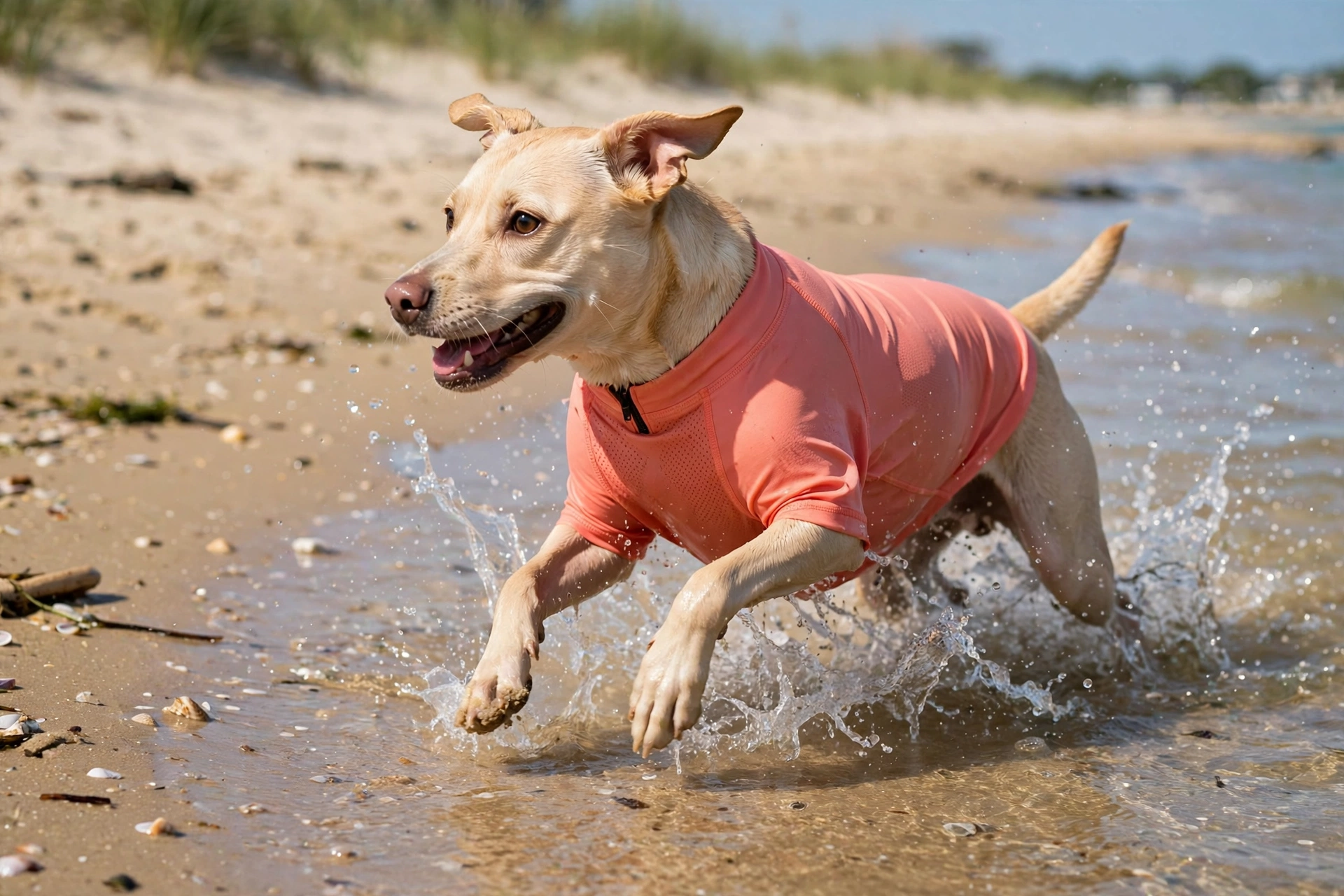
Heat checks should be just as routine as fit checks. Put the shirt on for a short outing first, not a full afternoon. Feel under the fabric at the chest and belly when you come in. If the skin feels notably hotter than the exposed skin, if panting takes much longer than usual to settle, or if the dog keeps seeking cool floors and refusing to play, treat that as information, not stubbornness. Choose a lighter fabric, a looser cut, a shorter outing, or a cooler time of day. The Humane Society reinforces the wider point in its advice to keep pets safe in heat, urging owners to limit exercise on hot days, provide ample shade and water, and watch for signs of overheating. Those habits matter more than any single garment, and a responsible sun plan builds the shirt into them rather than using the shirt as a reason to stay out longer.
A lightweight cooling sun tee is often the better second option for dogs who run warm. It trades a little coverage or durability for a thinner, more breathable knit that suits short outings, warm evenings and dogs who have already shown they dislike heavier layers.

Sychien Dog Onesie Pajamas All-Season Dog Clothes Soft Stretchy Pet Apparel for Indoor Wear Quick-Dry Dog Sun Shirt with UV Protection for Small Medium Large Dogs,L
Offer 17.59 $
List Price
Breed and coat change the calculation again. A hairless dog gains cover and loses very little airflow, because there was no insulating coat to begin with. A thin-coated but double-coated dog, a senior dog, an overweight dog, or a short-nosed breed that already pants inefficiently has much less margin. For those dogs, the shirt belongs on for the bright part of an outing and off during rest in shade, and the outing itself should be shorter and slower than it would be in spring. There is no rating on a label that can make that judgment for you. You make it by watching the individual dog in front of you, on the day in front of you, and being willing to cut a walk short when the dog tells you it is enough.
The Wet Shirt Cooling Bonus and Its Limits
A damp sun shirt can cool as well as cover, within limits. Wetting a lightweight shirt before a walk adds evaporative cooling as the water leaves the fabric, and for many light-coated dogs that combination is the sweet spot on a bright, breezy day. The dog gets torso cover from the sun and a cooler surface against the coat at the same time. It works best when the fabric is thin, the air is moving, and the humidity is not so high that evaporation stalls. It also works best as a short-outing tool. Once the shirt dries out, the cooling effect is gone, although the UV cover remains, and once a shirt is soaked through and heavy, some dogs find it clammy and uncomfortable.
Use cool water, not icy water, and rewet the shirt rather than pushing on when a dog looks hot. The American Kennel Club describes the early signs of heatstroke and the need to move a struggling dog to a cooler place and seek veterinary help when signs progress. Wetting a shirt is a comfort measure for a dog who is coping well. It is not a treatment for a dog who is wobbling, drooling heavily, vomiting, or seeming confused. That dog needs shade, air conditioning if you can get it, cool water applied to the body, and a veterinarian. Owners sometimes delay that decision because they were doing something that felt protective, like dressing the dog carefully that morning. Do not let a good prevention habit slow down an emergency response.
There is also a simple hygiene point to the wet shirt. A damp garment picks up grass, sand and sunscreen residue faster than a dry one, and a dog who swims in it will bring home whatever was in the water. Rinse it after use, let it dry fully before the next outing, and keep a second shirt in rotation if your dog is outside daily. That rotation habit will sound familiar to anyone who has used a DIY calming dog shirt or rotated anti-anxiety shirts for dogs through a storm season. Garments that live on dogs get dirty in dog ways, and a clean, dry shirt is more comfortable, less irritating, and more likely to keep the protective qualities it started with.
When to Skip the Shirt and Use Shade and Timing Instead
Sometimes the right answer is not a better shirt, it is a different plan. Midday in strong sun, high humidity with no breeze, a dog who is already panting hard at rest, a puppy or senior who tires quickly, and any dog recovering from illness or surgery are all reasons to keep the outing short, shaded and early or late in the day, shirt or no shirt. VCA Hospitals advises keeping dogs with solar dermatitis out of sunlight during the hours when ultraviolet light is most intense, roughly the middle of the day, and that timing advice is sensible prevention for any sun-sensitive dog, not only for dogs already diagnosed. The RSPCA makes the same practical point for dogs in hot weather, encouraging cooler walking times, shade, water and close attention to signs that a dog is struggling.
Timing is a form of protection that costs nothing and never rubs, overheats or fades in the wash. Walk before the sun is high or after it drops. Choose the shaded side of the street and routes with trees, awnings or buildings between you and the light. Build rest stops into a hike instead of treating them as a failure of fitness. At home, make sure a dog who loves the yard can choose real shade and cool water at any moment, and bring a known sunbather inside during the brightest hours rather than relying on willpower, yours or the dog’s. Many pale dogs will lie in full sun long past the point where their skin should have called time. That is a management problem for the owner, and a shirt is only one tool for managing it.
For dogs who overheat fast in a fitted sun shirt, a loose quick-dry cooling mesh shirt is the type worth considering. It shades the back and torso while letting air move through the fabric, which is where heavier knits leave warm dogs uncomfortable on a sunny day.
Skip the shirt, too, when the skin underneath it needs attention. A shirt over an open sore, a fresh surgical site that your veterinarian wants left uncovered, a spreading rash, or skin that is already blistered from sunburn will trap moisture and friction against tissue that needs air and examination. Recovery garments are a separate category with their own veterinary logic, which is why owners should keep the distinction clear between a sun shirt and a recovery suit, and ask the veterinarian which one, if either, belongs on a healing dog. When in doubt, the examination comes first and the garment comes after, never the other way around.
Care, Washing and Why UPF Protection Fades
A sun shirt slowly becomes an ordinary shirt if you treat it carelessly. The protective quality of a fabric depends on its weave staying tight and its fibers staying intact. Stretching, abrasion, repeated hot washing, harsh detergents, and long storage in bright light all work against that. A shirt that has been pulled over a broad chest a few hundred times, dragged across pavement by a dog who rolls, and washed hot after every outing will not block as much light as it did when it was new, even if it still looks fine on the dog. That gradual fade is easy to miss because there is no warning label that changes color when the protection drops.
Care is simple, and simple is the point. Rinse out salt, sand and sunscreen residue after bright or wet outings. Wash cool or warm rather than hot, with a mild detergent, and skip fabric softeners that coat fibers. Close any fasteners before washing so they do not snag the knit. Dry in shade rather than leaving the shirt draped over a fence in full sun for hours, which is an oddly common way to age the very fabric you bought to fight sunlight. Store it flat or loosely folded, not stretched over a hanger by the neck. Check it before each season by holding it up to a bright light. If you can see a lot of light through a stretched, thin patch over the shoulders or belly, that patch is telling you the cover there is no longer what it was.
Replace the shirt when the fit changes as well as when the fabric thins. Weight gain, weight loss, muscle change in a young dog, and the slower shape changes of age can all turn a good fit into a tight one, and a tight fit both stretches the weave and raises the heat problem discussed earlier. Keep the old sizing notes when you buy, measure the chest at its widest point and the body length again rather than trusting memory, and be honest about the result. A shirt bought for last summer’s body is memorabilia, not protection, if the dog wearing it has changed.
Putting a Sun Plan Together for a Sensitive Dog
A good sun plan is a routine, not a purchase. Start with the dog in front of you. Note where the fur is thinnest, where the skin is pinkest, and how the dog actually spends time outside. Choose a shirt for that pattern of exposure, with belly coverage for a sunbather, a lighter tee for a dog who runs warm, and a longer style for a hairless dog who needs torso cover most of the day. Add dog-safe sunscreen for the nose and ears. Keep walks early or late when you can, carry water, plan shade into every route, and check the skin under the shirt when you come home, the way you would check paws after a rough trail. Small checks, repeated daily, catch redness while it is still a warning instead of a wound.
Keep notes for the first few weeks. Which shirt stayed in place. Which outing was too long. Which patch of skin pinked up despite your best effort, and what was different that day. Those notes turn generic advice into knowledge about your dog, and they make the next purchase, the next route and the next summer noticeably smarter. They also give your veterinarian something concrete to work with if the skin ever does become a medical question, rather than a vague sense that the dog seemed fine until suddenly it was not.
Above all, keep the order of priorities straight. Shade and timing first. Water and rest always. A breathable, well-fitted shirt as the working layer for a dog who needs torso cover. Sunscreen for the exposed details. A veterinarian promptly for skin that blisters, ulcerates, changes color in a spreading patch, or fails to heal. In that order, a light-coated or hairless dog can enjoy bright days, long walks and lazy yard time with far less risk, and the owner can stop choosing between keeping the dog inside and worrying every minute it is outside. That middle ground is exactly what a good sun shirt is for.
Our view
We think the best sun shirt is the one a sensitive dog forgets it is wearing. Buy for coverage where your dog actually burns, keep the fabric light enough that heat never becomes the bigger problem, and treat the shirt as one part of a shade, timing and water routine rather than a license to stay out at midday. A pale or hairless dog does not need to miss the summer. It needs an owner who plans for its skin as carefully as for its exercise, and a shirt that earns its place in that plan every single outing.
— The Pet Shirts
Frequently Asked Questions
Do all white dogs need a UV shirt?
Not every white dog needs one for a short, shaded morning walk. A white or thin-coated dog who spends long periods in bright sun, sunbathes on its back, hikes in open country, or has already pinked up after outings is a strong candidate. Watch the belly, ears and nose, and let the dog’s own history guide the decision.
Can I put human sunscreen on my dog instead of buying a dog product?
That is a risky shortcut. Dogs lick sunscreen off, and some ingredients common in human products, including zinc oxide, can harm them when swallowed. Use a product made for dogs on exposed skin, and ask your veterinarian if you are unsure about a specific formula.
Will a sun shirt make my dog too hot?
It can, if the fabric is heavy, the fit is tight, or the outing is long and humid. Choose a lightweight, breathable shirt, start with short outings, and check panting and the skin under the fabric. If the dog struggles to cool down, change the shirt, the timing, or both.
Does a wet sun shirt still block UV?
A wet shirt still provides torso cover, and evaporation can help the dog feel cooler in dry, breezy air. Stretch and fabric condition still matter, and a soaked, sagging shirt may cover less well than a properly fitted dry one, so check the fit after wetting it.
When should sun damage on a dog be seen by a veterinarian?
Promptly, when skin is blistered, painful, crusted, ulcerated, bleeding, rapidly changing, or not healing, or when a dog seems unwell alongside the skin change. Repeated damage in one spot also deserves an examination, because chronic sun injury can progress beyond simple sunburn.
Questions about sun shirts, sizing or a dog who burns easily? We are glad to help you think it through.
Sources
- American Kennel Club, dog sunscreen guidance
- American Kennel Club, heatstroke in dogs
- ASPCA, hot weather safety tips
- PetMD, can dogs get a sunburn
- VCA Hospitals, solar dermatitis in dogs
- Cornell Riney Canine Health Center, summer heat safety tips for dogs
- Merck Veterinary Manual, nasal dermatoses in dogs
- Zoetis Petcare, can dogs get a sunburn
- Humane Society, keep pets safe in the heat
- RSPCA, dogs in hot weather
- Skin Cancer Foundation, sun protective clothing