As an Amazon Associate I earn from qualifying purchases.
When a dog cannot stop scratching, the skin rarely gets the quiet it needs to heal. A belly rubbed raw overnight, a hip chewed every time the house goes still, a hot spot that looks better in the morning and worse by evening. A barrier shirt does not treat the allergy underneath, and it does not replace medicine. What it does is simpler and, for many dogs, decisive. It puts a clean layer of fabric between nails, teeth and irritated skin, so the damage stops while the real treatment gets time to work. This guide explains when that layer helps, how to choose it, and when scratching needs a veterinarian instead of another shirt.
Looking for shirts that protect skin and calm anxious dogs?
Start with our hub of fit, recovery and calming guides, then come back here for the barrier details.
Key Takeaways
- A barrier shirt blocks nails and teeth from irritated skin. It protects healing skin but does not cure the allergy causing the itch.
- Breathable, snug fabric works best. A hot, loose or damp shirt can make itching worse.
- Match coverage to the scratch zone. Torso, leg and neck patterns protect different areas.
- Own two shirts and rotate them through the wash. A dirty barrier stops being a clean barrier.
- Oozing sores, a bad smell, ear trouble or rapid spreading are vet problems, not shirt problems.
Table of Contents
- Why Dogs Scratch in the First Place
- How a Barrier Breaks the Itch Scratch Cycle
- Barrier Shirt Compared With Cones, Sprays and Medicine Alone
- Choosing Fabric That Protects Without Overheating
- Coverage Patterns for Torso, Legs and Neck
- When a Shirt Is Not Enough and a Vet Visit Is the Answer
- Washing Rotation and Combining a Shirt With Treatment
- Our view
- Frequently Asked Questions
- Sources
- Recommended
Why Dogs Scratch in the First Place
Itch is a symptom, not a diagnosis. That distinction shapes everything in this guide, because a shirt can interrupt scratching no matter what started it, but only a proper workup can find the cause. Most persistent scratching in dogs traces back to a short list of problems. Environmental allergies sit near the top. Pollen, mould, dust mites and ordinary household dust can all set off an immune reaction that shows up in the skin rather than in sneezing, and the American Kennel Club allergy overview walks through how those triggers present. Dogs with this pattern often chew their paws, rub their faces, scratch behind the elbows and flare in particular seasons, then improve when the season turns.
Food is the other allergy lane owners suspect first, and sometimes they are right. A dog can react to an ingredient it has eaten happily for a long time, which is why guessing and swapping proteins at random rarely settles the question. As Tufts nutritionists explain food allergies, a true food allergy is an immune response to a specific ingredient, and the reliable way to test it is a strict elimination diet run with veterinary guidance, not a quick panel bought online. The PetMD comparison of allergy types is useful here too, because it separates year round food reactions from seasonal environmental flares, a difference that changes the whole treatment plan.
Then there are hot spots, the problem that turns a manageable itch into an emergency of the dog’s own making. A hot spot, also called acute moist dermatitis, is a raw, moist, painful patch that can appear and spread with startling speed once a dog starts licking and chewing one spot. The AKC guide to hot spots describes how quickly these lesions develop, and PetMD on hot spots makes the same point from the treatment side. Underneath the lesion there is usually something else going on, an allergy flare, an insect bite, trapped moisture after swimming, a small wound, or an ear problem the dog is really trying to reach. Vets group many of these infected, inflamed patches under moist pyodermatitis, meaning a surface skin infection fed by moisture and self trauma.

Flea allergy deserves its own mention because it hides so well. A dog that is highly sensitive to flea saliva can itch intensely from very few bites, so the absence of visible fleas does not rule fleas out. The VCA Hospitals allergy guide covers flea allergy alongside environmental and food causes, and it is a good reminder that parasite control is part of allergy control, not a separate chore. Whatever the trigger, the pattern that matters for this article is the same. The dog itches, the dog scratches, the skin barrier breaks down, bacteria and yeast that normally live quietly on the skin multiply in the damaged area, and the new irritation itches even more. If you have read our guide to best calming shirts for dogs, you will recognise a cousin of this loop, since anxiety driven licking follows a similar cycle even when the starting point is stress rather than allergy.
Knowing the trigger still matters, because it decides what happens alongside the shirt. A dog flaring from pollen may need a rinse after walks and a vet directed anti itch plan. A dog reacting to food needs the diet trial, not a new flavour every fortnight. A dog with a hot spot over an infected ear needs the ear treated or the scratching simply returns. Owners who want the broader anxiety picture can compare this approach with dog compression shirts for anxiety and anti-anxiety shirts for dogs, which use gentle pressure for a different job. Barrier shirts earn their place for a narrower reason, and keeping that reason clear prevents the common mistake of expecting fabric to do a medicine’s work.
How a Barrier Breaks the Itch Scratch Cycle
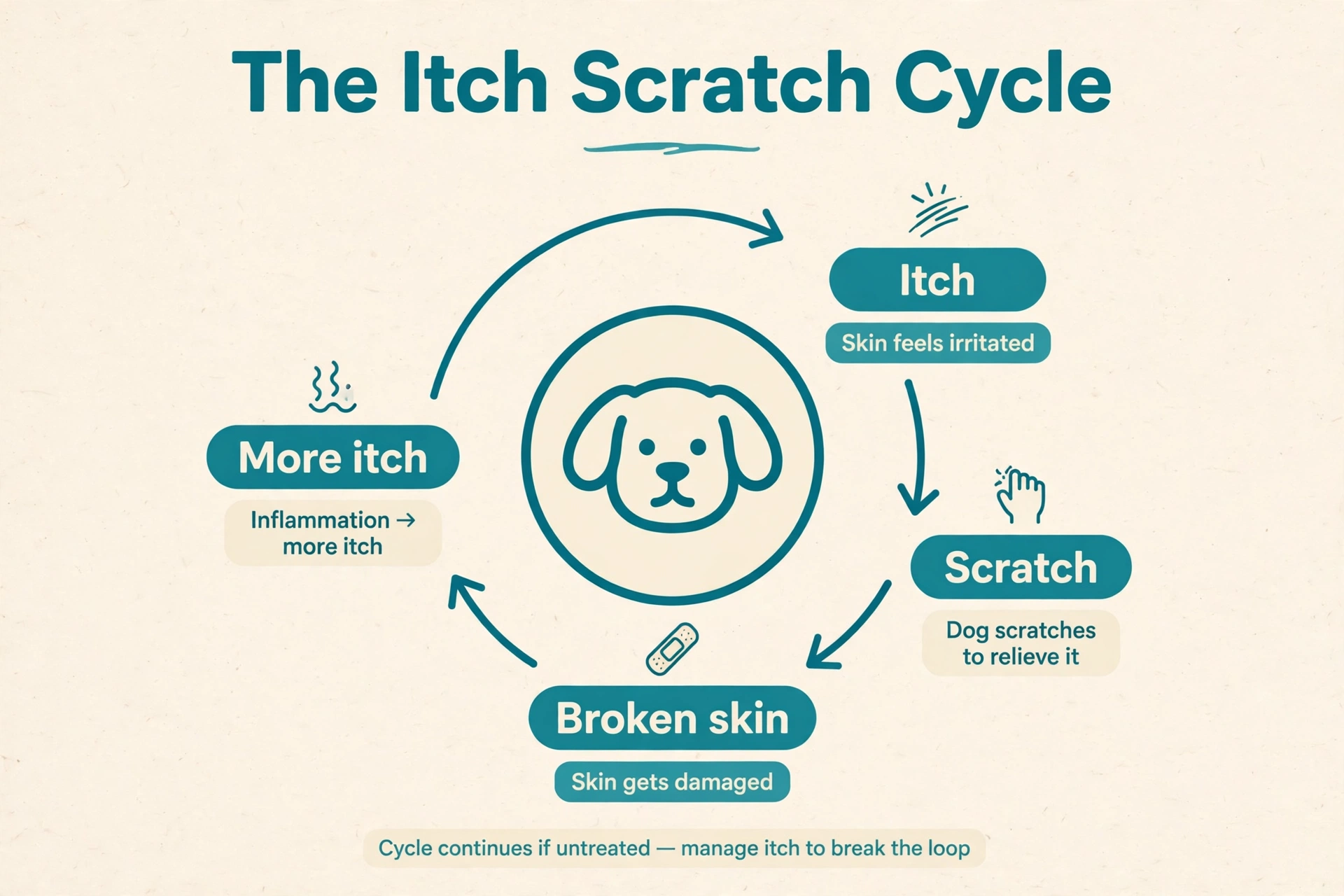
The shirt works by removing the reward and the damage at once. Scratching feels relieving for a few seconds, which is why dogs repeat it, but every pass of the nails scrapes away the fragile new skin trying to form over a sore. Licking adds moisture and bacteria from the mouth. Chewing adds puncture pressure. Put a smooth layer of fabric over the area and three things change immediately. The nails slide over cloth instead of skin. The tongue cannot keep the lesion wet. And the dog cannot turn a small itch into an open wound during the night, in the car, or in the ten minutes nobody is watching. That protected window is often the difference between a spot that settles in days and one that needs repeated vet visits.
Veterinary sources describe the same cycle from the medical side. In its discussion of PetMD skin allergy guidance, repeated scratching and licking are what turn allergic skin into sores and hot spots, because the protective surface of the skin gets damaged. The Merck Veterinary Manual on atopic dermatitis goes deeper, explaining how a weakened skin barrier, allergen sensitisation and an imbalance of skin microbes feed each other in allergic dogs. That is exactly the loop a barrier interrupts from the outside while medicine calms it from the inside. Neither half is the whole answer, and honest guidance should say so plainly.
There is also a comfort effect, and it should not be oversold. A snug shirt gives steady, gentle contact across the torso, and some dogs settle under that contact in the same way they settle under a close fitting calming wrap. Fit matters enormously here, which is why our explainer on how tight a calming shirt should be is worth reading before you size a barrier shirt, and why ThunderShirt vs a regular dog shirt helps separate pressure garments from ordinary clothing. A barrier shirt is not primarily a pressure garment, though. Its first job is coverage. If it happens to calm your dog as a bonus, good. If it only stops the nails reaching the skin, it has already done the job you bought it for.
The barrier idea also explains the limits. A shirt cannot protect paws a dog is chewing, a face being rubbed along the carpet, or ears being scratched by a hind foot that reaches around the collar line, unless the pattern specifically covers that area. It cannot stop itch that originates inside the ear canal. And it cannot help a dog who removes it within minutes, though most dogs accept a well fitted shirt far more readily than they accept a cone, especially at night. Think of the shirt as a fence, not a cure. A good fence around a healing garden does not make the plants grow, but nothing grows at all if something keeps trampling the bed. For dogs whose scratching spikes during storms or fireworks on top of an allergy flare, layering this thinking with dog shirts for fireworks and thunderstorms can help you plan for the worst nights of the year.
Owners sometimes ask whether a plain dog t-shirt from a drawer will do the same job. Sometimes, briefly, yes, and our DIY calming dog shirt guide shows how people improvise. But a purpose made barrier shirt differs in the details that decide whether it stays protective for a full day. The fabric is smoother and less likely to catch on a crust. The fit stays put when the dog rolls, sleeps and shakes. The seams sit away from sore areas. And the coverage is deliberate, extending over the zones dogs actually scratch, rather than ending wherever a fashion cut happens to end. An improvised shirt is a fine first night measure. For a dog working through weeks of allergy treatment, the dedicated garment is the more reliable tool.
Barrier Shirt Compared With Cones, Sprays and Medicine Alone
Each tool in the anti scratch toolkit does one job well and leaves gaps the others fill. Owners often frame this as a choice, shirt or cone, spray or tablets, when in practice vets combine them depending on where the lesion is and how determined the dog is. The table below sets out what each option does and does not do, so you can see where a barrier shirt sits and why it so often replaces the cone for torso and hip lesions while never replacing the prescription.
| Option | What it does | What it does not do |
|---|---|---|
| Barrier shirt | Covers torso, hip and, in some patterns, leg and neck skin so nails and teeth cannot reach it. Comfortable for sleeping, eating and moving around the house. | Does not treat allergy or infection. Does not protect paws, face or ears unless the pattern covers them. Fails if it is damp, dirty or poorly fitted. |
| Cone (Elizabethan collar) | Physically stops the mouth reaching most of the body. Useful after procedures and for lesions a shirt cannot cover. | Does not stop a hind foot scratching the neck, ear or shoulder. Many dogs eat, sleep and relax poorly in one, and some panic. |
| Bitter spray | Makes a treated surface taste unpleasant, which deters some dogs from licking that spot for a short period. | Wears off, washes off and does nothing against scratching with the feet. Some dogs ignore the taste entirely. Not a treatment for the skin itself. |
| Medication alone | Addresses the cause, reducing itch, inflammation and infection under veterinary direction. | Takes time to work, and during that window an unprotected dog can reopen healing skin in a single unsupervised night. |
The cone comparison deserves a fair hearing, because cones remain the right answer in some houses. The VCA Hospitals hot spot advice lists preventing licking and scratching as a core part of treatment, and a cone achieves that for mouth driven damage. But a cone does nothing at all about a hind leg raking the side of the neck, and that is precisely the motion that keeps many hot spots alive. A shirt covers the target skin itself, so it works against both the mouth and the foot. For a torso lesion on a dog who sleeps badly in a cone, that difference is not a minor comfort point. It is the difference between a device the dog wears all night and one the owner removes at midnight out of sympathy, undoing the whole plan.
Post surgery protection is a related but separate topic, covered in our guide to the best dog recovery suits after surgery, and a barrier shirt for allergy scratching should be chosen on allergy criteria, breathability, coverage of itchy zones and washability, rather than on surgical features your dog does not need. Mention that distinction to your vet if you bring a shirt to an appointment, because the questions you are asking are different. You are not protecting a stitch line for a fortnight. You may be protecting reactive skin, on and off, for a whole allergy season.
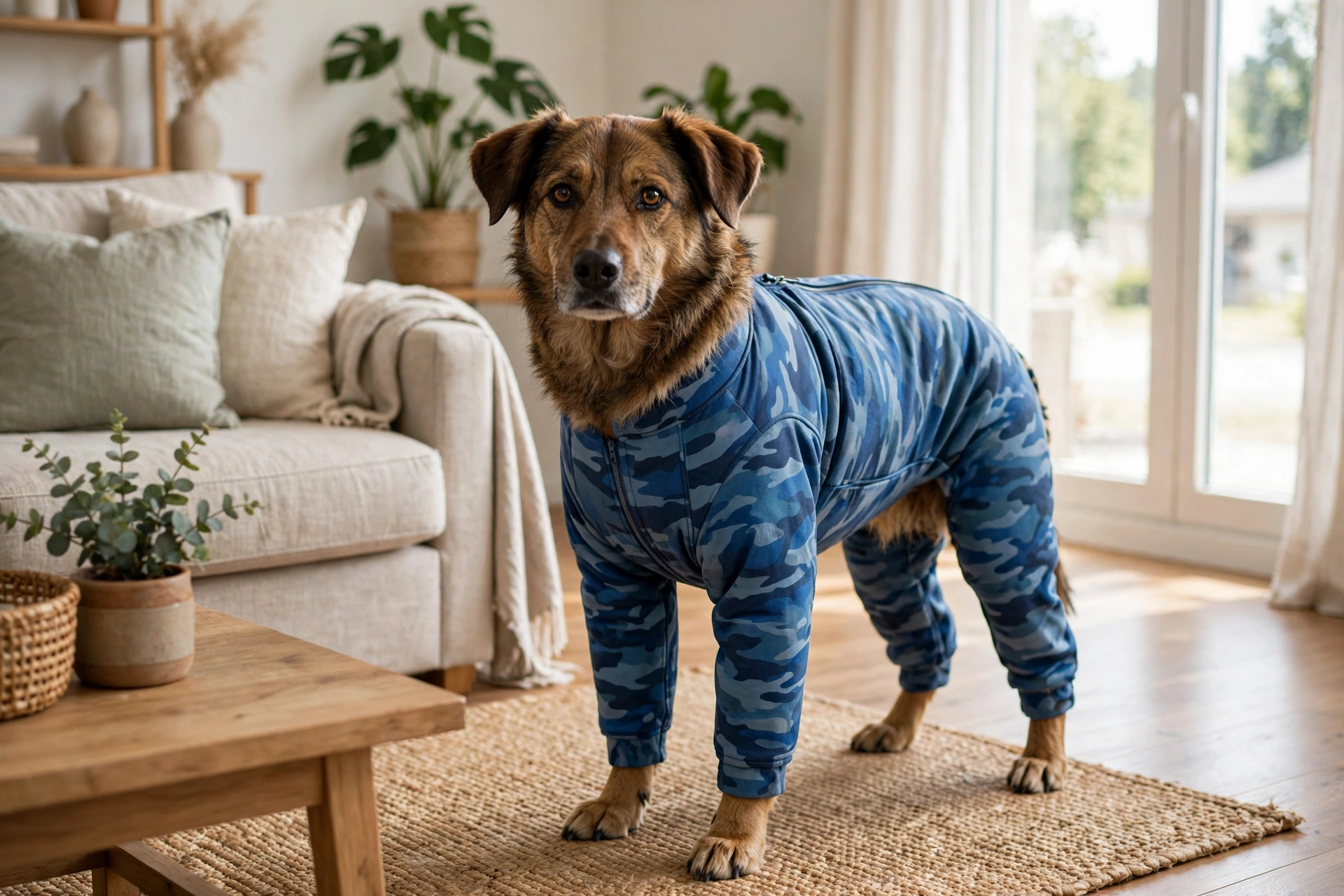
For dogs whose main problem is a healing torso or hip hot spot, a full torso barrier suit is usually the starting point, because it covers the largest scratchable area in one garment and stays in place overnight.

Bitter sprays, by contrast, are the weakest leg of the stool. They can help as a short term nudge on a bandage edge or a mildly interesting paw, but they evaporate, they need constant reapplication, and they do nothing at all about the hind foot, which is the main weapon in most scratching. Medication alone has the opposite profile. It is the only part of the plan that actually reduces itch and treats infection, and Cornell on allergy testing and immunotherapy explains the longer term options vets can offer when allergies keep returning, including testing and custom immunotherapy. Yet even the right prescription needs days to settle a flare, and a dog can undo a week of healing in one determined session. The shirt is what guards those days. That is the honest pitch for barrier shirts, and it is a strong one. They are the cheapest, kindest insurance a healing dog can wear.
Choosing Fabric That Protects Without Overheating
Fabric choice decides whether a barrier shirt helps or quietly makes things worse. The wrong fabric traps heat and moisture against already inflamed skin, and moist, warm skin is exactly the environment in which hot spots thrive. Look for a smooth, breathable knit with some stretch, the kind of material that moves with the dog, lies flat over the ribs and lets air pass through. Cotton blends breathe well and wash easily. Lightweight performance knits dry faster after a damp walk. What you want to avoid is anything fleecy, rubberised or heavy during warm weather, anything with rough internal seams over the sore area, and anything so loose that a foot can get underneath the hem and scratch under the shirt, which defeats the entire purpose.

Fit and fabric work as a pair. A barrier shirt should be snug enough to stay in place and deny a nail purchase on the skin, without compressing the chest or riding into the armpits, where friction creates a brand new sore on a dog who already has enough of them. Our roundup of the best comfort dog anxiety shirts covers the comfort checks in detail, and the same checks apply here, two fingers of ease at the neck, no twisting when the dog shakes, no bunching behind the front legs. Heat is the other half of fit. Dogs with thick coats, flat faced breeds and any dog in a warm house can overheat in a full coverage garment worn around the clock, so build in supervised shirt free breaks in a room where you can interrupt scratching, and read our guide to calming dog shirts for summer for the warm weather version of this advice.
For everyday wear through an allergy flare, a lightweight breathable cotton shirt is often the most practical choice, since it is the garment a dog can live in for long stretches without getting hot or bothered, and a plain inexpensive shirt is easy to own in twos so one is always clean while the other is in the wash.

Moisture management deserves its own paragraph, because it is where good intentions go wrong. A dog who has been out in the rain, drooled into the neckline, or licked the outside of the shirt until it is damp is now wearing a wet compress over irritated skin. Change a damp shirt promptly, the same way you would change a wet bandage, and never leave a dog in a soaked shirt to dry on the body. The ASPCA grooming guidance is a useful baseline for the coat and skin care that sits around all of this, including keeping the coat clean and properly dried, because a barrier shirt over a matted, dirty coat protects very little. If your dog swims, the routine is simple. Shirt off before the water, skin and coat dried properly afterwards, clean dry shirt on once the dog is home and settled. Skipping the drying step and dressing a damp dog is one of the fastest ways to grow a new hot spot under a shirt bought to prevent exactly that.
Closures matter more than they look. Poppers and hook and loop fastenings along the back are easier to manage on a sore, wriggly dog than pulling a tight garment over the head and down over tender ears. Check that fastenings cannot be chewed into small parts, that they do not sit directly over the lesion, and that the garment still fits after the first few washes, since some knits relax and a shirt that fit on Monday can be a scratchable skirt by the following week. For large, deep chested dogs, sizing up by chest measurement rather than weight usually gives the truer fit, a point we also make for thunder shirts for large dogs, because barrel chests are where most off the peg garments fail.
Coverage Patterns for Torso, Legs and Neck
Buy coverage for the skin your dog actually attacks, not for the skin a product photo happens to show. Start by mapping the damage. Keep a simple note for a few days of where the redness, hair loss and scabs actually are, and where you catch the dog scratching or chewing. Owners are often surprised. The dog they thought was scratching its side is really raking the front of the neck with a hind foot, or chewing the outside of the elbow where a standard torso shirt ends. The map decides the pattern, and choosing from the map rather than from habit saves both money and another week of broken skin.
A torso pattern is the workhorse. It covers the ribs, back, belly and hips, which is where allergy flares and hot spots most often bloom, and where a hind foot does its worst work. It suits the classic allergic presentation described in ASPCA guidance on common dog conditions, where skin problems sit among the most frequent reasons dogs end up at the vet. A leg coverage pattern extends sleeves over the elbows or hind legs, protecting dogs who chew the front of the foreleg, lick the hock, or scratch one hip raw. Sleeves need the most careful fit check of any pattern, because a sleeve that twists or sags becomes a trip hazard and a chewing target. A neck extension covers the throat and the front of the shoulders, the zone a hind foot reaches when a dog scratches at an ear or a collar line irritation, though it should never be tight around the throat and should come off at once if a dog paws at it persistently.
When the scratch zone sits on the ears and neck, a soft compression ear band earns its keep, holding the ears flat against the scratching and head shaking that a torso cut cannot reach.

Some dogs need a combination over time rather than a single perfect garment. A dog in the middle of a hot spot crisis may wear a full torso suit for two weeks, then step down to a lighter shirt for the rest of the allergy season once the lesion has closed. A dog whose flares move, belly one month and neck the next, may genuinely need two patterns in the drawer. This is normal in allergy management, which is a season long project rather than a single purchase, and it is why the broader category of anxiety clothing for dogs and barrier wear rewards owners who think in terms of a small working wardrobe. Two or three garments that rotate, wash well and cover the right zones will outperform one expensive garment worn until it smells, every time.
Whatever pattern you choose, do a reach test before the first unsupervised wear. Dress the dog, let it move, roll, shake and settle, then watch for ten minutes. Can a hind foot get under the hem? Can the mouth reach the edge of the lesion around the leg opening? Does the neckline slide back and expose the shoulder patch you bought it to cover? Adjust or change size now, in daylight, while you are watching. The reach test done once at home is worth more than a week of hopeful overnight wear in a garment the dog learned to defeat on the first evening.
When a Shirt Is Not Enough and a Vet Visit Is the Answer
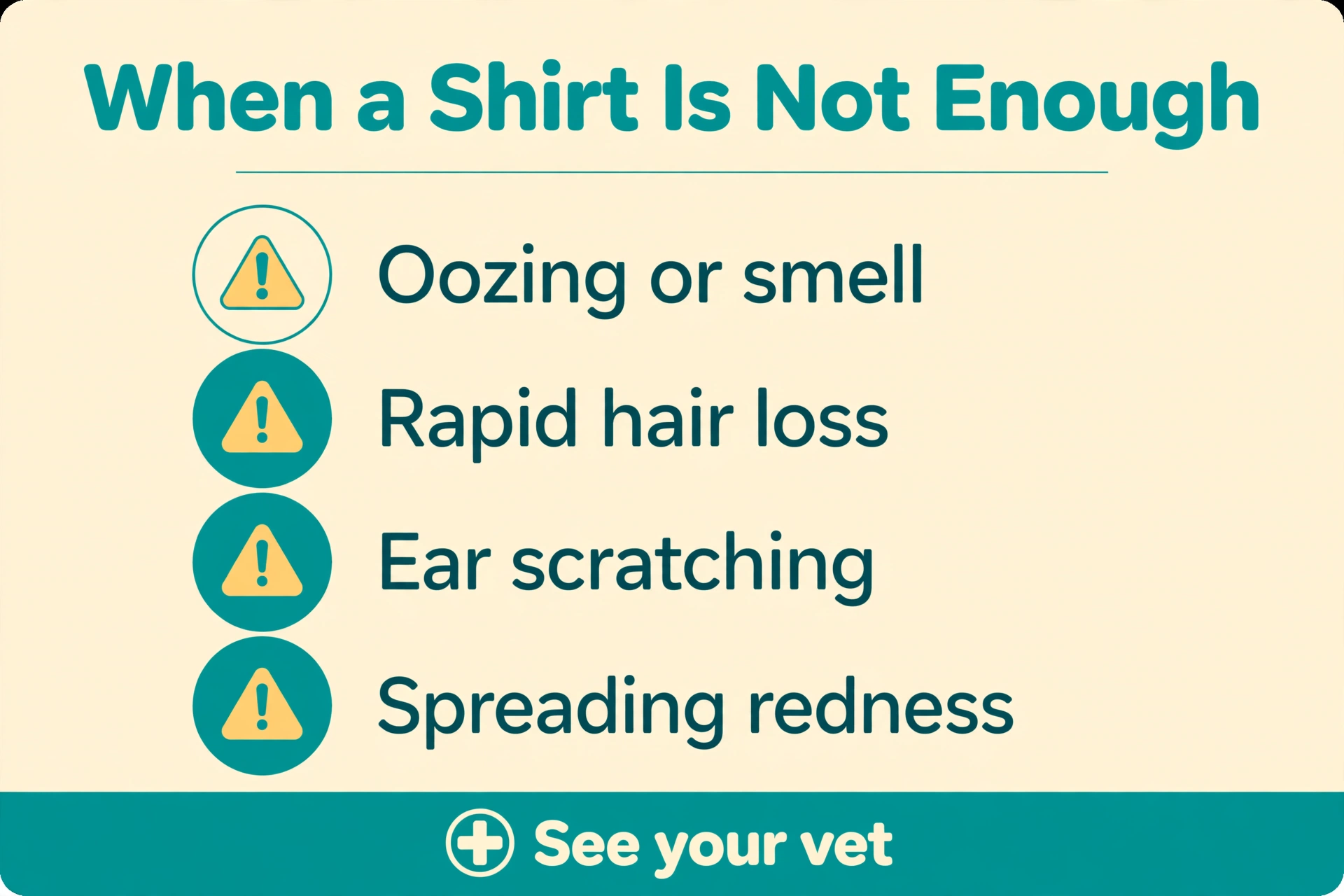
A barrier shirt protects skin. It does not diagnose, disinfect or prescribe, and some presentations should never be managed at home under fabric. Book a vet visit promptly if you see any of the following. A sore that is oozing, wet, spreading or developing a yellow crust. A bad or sweet smell from the skin, which often means infection is established. Hair loss in rapidly widening patches. A dog who is off its food, unusually quiet, or in obvious pain when the area is touched. Scratching that suddenly involves the ears, head shaking, a tilted head, dark discharge or a dog crying when the ear is handled, because ear disease and skin allergy travel together and the ear will keep driving the scratching until it is treated. VCA Hospitals makes the ear connection clearly in its allergy guidance, noting how often allergic dogs present with ear problems alongside the skin signs owners noticed first.
Hot spots in particular can look deceptively manageable in the morning and be a veterinary problem by the evening. Because they can deepen and spread so quickly, VCA Hospitals treats prompt veterinary attention as part of standard care for hot spots, especially for large, painful or infected lesions. A shirt over an infected hot spot that has not been clipped, cleaned and assessed can trap discharge against the wound and hide how fast it is spreading, which is the one genuinely harmful way to use a barrier garment. The rule is simple. New, mild, dry irritation on a dog already under a vet’s allergy plan is shirt territory. Anything wet, smelly, spreading or painful is vet territory first, and shirt territory afterwards, once the vet knows the garment is part of the plan and has told you how it should sit with any dressing or topical treatment underneath.
There are quieter vet triggers too. A dog who has scratched for more than a couple of weeks without a diagnosis does not need a better shirt, it needs the workup, because the list of causes includes parasites, infection and hormonal disease alongside allergy, and several of those are cheap to rule out and miserable to miss. A dog whose itching is new, intense and paired with hair loss in a pattern you have not seen before deserves the same prompt attention. And a dog on long term allergy medication whose flares are getting more frequent, not less, needs the plan reviewed rather than the wardrobe expanded. Fabric is supportive care. The moment it starts substituting for diagnosis, it stops helping.
Washing Rotation and Combining a Shirt With Treatment
Two shirts, washed in rotation, is the system that actually works. A barrier shirt collects exactly what you do not want back on healing skin, shed hair, dried discharge, pollen walked in from the garden, and the bacteria and yeast from the lesion itself. A dog who wears the same unwashed shirt for a week is being reintroduced to its own irritants every morning. Own at least two, wash one while the other is worn, and wash both on a gentle cycle with a mild, unscented detergent, rinsing well, because detergent residue against allergic skin can itch in its own right. Dry fully before dressing the dog. Check seams, fastenings and thinning patches as you fold, and retire a shirt that has gone baggy, since a loose barrier is barely a barrier at all.
Combining the shirt with vet directed treatment is where the real gains sit, and the shirt should be presented to your vet as part of the plan, not hidden from them. Medicated baths, topical products, ear treatment, parasite control and prescribed anti itch or antibiotic medication all have their place, and the shirt protects the investment each of them represents. Practical details matter. If a topical product needs to dry or absorb, apply it, wait as directed, then dress the dog, so the shirt stops the dog licking the product off rather than smearing it into the fabric. If your vet wants a lesion aired for part of the day, schedule that airing for a supervised hour on a clean floor, not for the unsupervised night. The long term picture is worth keeping in view too. For dogs with confirmed environmental allergies, Cornell describes how testing can shape immunotherapy that reduces reliance on day to day medication over time, and a dog on that path will still benefit from barrier protection during every flare along the way.
Keep a short flare diary alongside the washing rotation. Note the date a flare starts, where it sits, what changed in the house or the weather, what treatment was used and when the shirt came off for good. Patterns that are invisible week to week become obvious across a season, and that diary is the most useful thing you can hand a vet at a review appointment, more useful than a bag of discarded shirt styles. It also tells you, honestly, whether the barrier is earning its place. If lesions are closing faster and night time damage has stopped since the shirt entered the routine, you have your answer in your own records rather than in anyone’s marketing.
Finally, be patient with the dog in front of you. Introduce the shirt on a calm evening, dress the dog for short periods first, pair it with food, a chew or a walk, and let the garment become ordinary before you rely on it overnight. Most dogs accept a well fitted shirt within a day or two, and many visibly relax in one. A dog who remains distressed, pants, freezes or works frantically to remove it needs a refit, a different pattern, or a conversation with the vet about alternatives, not firmer insistence. The barrier is supposed to lower the temperature of a hard few weeks for both of you. Chosen well, washed often and paired with proper treatment, that is exactly what it does.
Our view
A barrier shirt is the most underrated tool in allergy care, precisely because it is not medicine and never pretends to be. It simply gives healing skin the one thing medicine cannot, an undisturbed night. Buy for coverage and breathability, own two, wash them like you mean it, and keep the vet in charge of the cause. Do that, and a humble shirt becomes the reason the expensive treatment finally gets to finish its job.
— The Pet Shirts
Frequently Asked Questions
Can a barrier shirt replace a cone for a hot spot?
For a hot spot on the torso, hip or shoulder, often yes, because the shirt covers the skin a hind foot or mouth would reach, and most dogs sleep and eat more calmly in one. For lesions on the paws, face or ears, a shirt usually cannot cover the area, so a cone or another vet suggested device may still be needed.
How long can my dog wear a barrier shirt each day?
Many dogs wear one for most of the day during a flare, with supervised breaks for air, a skin check and a change into a clean shirt. Check the skin at least twice a day, remove a damp shirt at once, and follow any schedule your vet sets around topical treatments or dressings.
How tight should a barrier shirt be?
Snug enough to lie flat and stay in place when the dog rolls and shakes, loose enough for two fingers at the neck and a full, comfortable breath. If a foot can get under the hem, it is too loose. If it leaves pressure marks or rides into the armpits, it is too tight or the wrong cut.
Will a barrier shirt cure my dog’s allergies?
No. A shirt blocks scratching and licking so skin can heal, but the allergy itself needs diagnosis and treatment, which may include parasite control, medication, diet changes or immunotherapy. Think of the shirt as protection that runs alongside treatment, never instead of it.
How many barrier shirts should I own?
Two is the practical minimum, one on the dog and one in the wash, because a clean rotation is what keeps the barrier hygienic. Dogs in a long allergy season, or dogs who get wet often, are easier to manage with three.
Questions about fit, coverage or a dog who will not stop scratching?
Visit The Pet Shirts for more guides on dog shirts that solve real problems, and always check persistent scratching with your veterinarian.
Sources
- American Kennel Club, Dog Allergies
- American Kennel Club, Hot Spots on Dogs
- PetMD, Hot Spots on Dogs
- PetMD, Dog Skin Allergies
- PetMD, Food Allergies vs Seasonal Allergies in Dogs
- Cornell Riney Canine Health Center, Allergy Testing and Immunotherapy
- Merck Veterinary Manual, Atopic Dermatitis in Dogs
- VCA Hospitals, Allergies in Dogs
- VCA Hospitals, Hot Spots in Dogs
- ASPCA, Common Dog Diseases and Conditions
- ASPCA, Dog Grooming Tips
- Tufts University, Food Allergies in Dogs