As an Amazon Associate I earn from qualifying purchases.
An older dog who once sprawled on cool floors may now curl tight, seek a sun patch, or shiver after a short trip outside. That change is rarely fussiness. Ageing bodies lose muscle, carry thinner coats, and move less, so they lose heat faster and recover from a chill more slowly. A well chosen shirt will not fix stiff joints or replace veterinary care, but it can add steady warmth, a feeling of security, and a softer layer between thin skin and the world. This guide explains how to choose warmth for a senior dog, how to dress stiff legs without a struggle, and how to use a shirt safely through the night.
Looking for practical gear for an older dog?
Start with fit, closures and recovery friendly designs before you buy anything new.
Key Takeaways
- Senior dogs feel cold sooner because muscle loss, a thinner coat and a slower, less active life reduce the heat their bodies hold.
- Warmth should be steady and breathable, never hot, tight or heavy enough to restrict breathing, movement or a toilet trip.
- Step-in and wide velcro designs protect stiff joints because no leg has to be bent or threaded through a narrow sleeve.
- Overnight wear needs a calm fitting check, a dry fabric, safe closures and a dog who can still move, drink and settle freely.
- New shivering, weight loss, pain or night restlessness is a reason to talk to a veterinarian, not only to buy a warmer shirt.
Table of Contents
- Why Senior Dogs Feel the Cold More Easily
- Warmth Without Overheating
- Gentle Compression, Anxiety and Restless Nights
- Dressing a Stiff Dog Without Forcing Legs
- Overnight Wear and Safety Checks
- Soft Fabrics for Thin Skin and Sensitive Bodies
- When Warmth Is a Vet Conversation Instead
- Our view
- FAQ
- Sources
- Recommended
Why Senior Dogs Feel the Cold More Easily
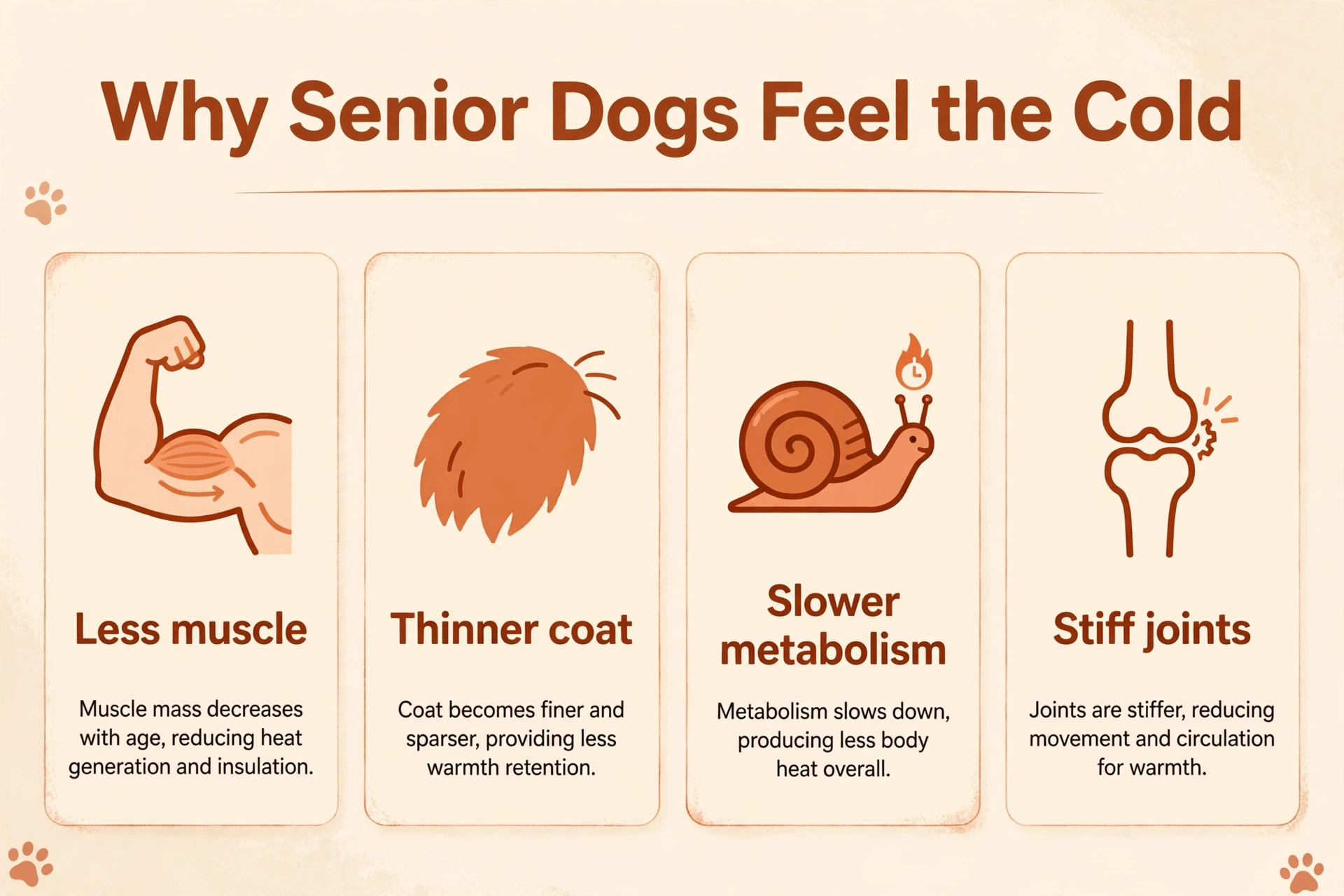
Less muscle, a thinner coat and a quieter metabolism leave an older dog with less insulation and less heat to spare. Muscle does more than move a dog around the block. It helps generate heat and it pads the ribs, spine and hips where a shirt sits. When activity drops, muscle fades gradually, and the familiar outline of a dog can change even when weight on the scale looks similar. Coat changes add to the problem. Many seniors grow a sparser coat, with skin that shows through along the back or belly, so cold air and a cold floor reach the body with little in between. Reading the signs of aging in dogs helps owners separate ordinary ageing from a change that deserves a check, because slowing down, weight change and behaviour change often arrive together.
Circulation and daily rhythm matter too. A dog who naps for long stretches on a hard or cool surface wakes stiff and chilled, then moves less because moving feels uncomfortable, then loses a little more condition. It becomes a circle. The University of Illinois Illinois senior dog handout notes that circulation can become less efficient in old age and that loss of core fat and muscle can affect a dog ability to handle cold, which is why vets suggest easy on, easy off layers for some seniors rather than expecting them to tough out a cold room. A shirt breaks that circle in a modest way. It holds a layer of warm air close to the chest and back, softens contact with bedding, and can make the first steps after a nap feel a little less stark.
Joint stiffness is part of the same picture. Osteoarthritis is a progressive joint disease in which cartilage deteriorates, and the osteoarthritis in dogs guidance from the AKC lists stiffness, difficulty getting up, reluctance to run or jump, irritability and loss of muscle mass among its signs. Cornell describes a similar pattern in its Cornell osteoarthritis guidance, including pain, lameness, difficulty with stairs and trouble rising from lying down. Cold does not cause arthritis, and a shirt does not treat it, but a stiff dog who is also cold will often brace, shiver and move even less willingly. Warmth is comfort care that sits alongside weight control, suitable exercise, pain relief and any plan your veterinarian sets. For dogs whose main problem is anxiety rather than age alone, our guide to best calming shirts for dogs covers the wider calming category, while this page stays focused on the older body.
Size and breed shape the risk. A small, lean, short coated senior will usually feel a cold evening far sooner than a large dog with a dense double coat, and a dog who has lost weight will feel it sooner than the same dog did at a healthier weight. Indoor life matters as well. Senior dogs spend more time lying still, often in one favourite spot, so check that spot. Is it near a door draft, on tile, or under an air vent? Moving a bed a short distance and adding a shirt for the coldest part of the day can help more than turning the whole house up. Watch your own dog rather than a calendar. Shivering at rest, seeking heat constantly, curling into the tightest possible ball, or refusing a short toilet trip in cold weather are practical clues that an extra layer would be welcome.
| Option for a senior dog | Warmth | Ease of putting on | Overnight suitability |
|---|---|---|---|
| Lightweight tee | Mild. A thin barrier for a cool room or a mild evening, not enough on its own for a very cold or very thin dog. | Depends on design. Pull-on styles can be hard on stiff shoulders, step-in styles are much easier. | Often the easiest overnight choice if it is soft, breathable, untwisted and free of dangling closures. |
| Fleece shirt | Highest of the three. Traps warm air and suits cold rooms, cold floors and short outdoor toilet trips. | Good when it opens wide or steps in. A narrow neck or tight sleeves undo the benefit for a stiff dog. | Suitable for a cold night if the room is not warm, the fabric stays dry and you check for overheating or bunching. |
| Compression wrap | Moderate. Close contact feels warm, but thin wrap fabrics add less insulation than fleece. | Velcro wraps can be excellent because they close around the body without lifting legs, provided the dog tolerates the sound and pressure. | Use overnight only when fit is proven during the day, pressure is gentle and even, and the dog settles rather than paces or pants. |
Warmth Without Overheating
The goal is a dog who stops shivering and settles, not a dog who is as warm as possible. Older dogs can struggle at both ends of temperature. They may chill quickly at rest, then overheat if a heavy fleece stays on in a warm room, after activity, or under bedding. Choose the lightest layer that does the job in the room where the dog actually sleeps. A breathable knit works for many indoor seniors. Fleece earns its place on cold floors, in drafty houses and for lean dogs who shiver in a tee. If you can slide two fingers comfortably under the fabric at the neck and chest, feel warm but not hot skin, and see normal relaxed breathing, you are in a sensible range. Our explainer on how tight a calming shirt should be is useful here too, because senior warmth and senior compression both fail when fit becomes a squeeze.
Think in layers and in moments rather than in one all day outfit. A dog might need fleece for the early morning toilet trip and the coldest evening hours, then a lighter tee, or no shirt at all, in a sunny midday room. The ASPCA ASPCA senior pet tips emphasise regular veterinary visits, consistent gentle exercise and adjustments for mobility, and clothing choices fit that same pattern of small, observed adjustments. Keep activity in the picture. A short, calm walk generates natural warmth and helps stiff joints loosen, and guidance on care for your senior dog returns often to routine, comfort and keeping an older dog appropriately active rather than wrapping them up and leaving them still all day.
For a soft fleece senior shirt, look for a wide opening, a smooth lining and coverage over the chest and back without a high, tight collar. This type suits the dog who feels the cold most and needs insulation more than pressure.

Check warmth with your hands and your eyes. Feel the ears and the skin under the shirt. Watch for panting, restlessness, drinking more than usual, trying to move away from a bed, or scratching at the shirt, all of which can mean too much heat or simple discomfort. In warm weather the calculation reverses, and a senior who needs support without insulation is better served by the lighter options covered in calming dog shirts for summer. Never use a heated product under or over a shirt unless a veterinarian has advised it for that dog, and never leave a shirt on a wet dog hoping it will dry in place. A damp layer chills, rubs and hides skin problems. Change into a dry shirt or remove it and dry the coat properly.
Room setup completes the layer. A supportive bed away from drafts, a blanket the dog can move off as well as under, and water within easy reach give the dog choices. A shirt should add to those choices, not remove them. If a dog consistently wriggles out of a particular style, believe the dog. Try a different closure, a lighter fabric or shorter wearing periods, and build up gradually with calm praise and a treat at dressing time so the shirt predicts comfort rather than a wrestling match.
Gentle Compression, Anxiety and Restless Nights
Some senior dogs are not only cold at night, they are unsettled, and gentle, even pressure can be part of a calmer bedtime routine. Ageing can bring anxiety that a younger dog never showed. A dog may follow you from room to room in the evening, pant in a quiet house, wake repeatedly, or pace a familiar hallway. Pain can drive that behaviour, and so can changes in sight, hearing and thinking. The category background in dog compression shirts for anxiety and anti anxiety shirts for dogs explains how close fitting garments are meant to work for anxious dogs generally. For a senior, the pressure must stay gentle. Ribs, breathing and a fragile body set a lower ceiling than they do for a strong young adult, and the shirt should feel like a steady hug you can easily slip fingers under, never like a bandage.
Night restlessness deserves a wider look before you assume anxiety alone. Cornell Cornell cognitive dysfunction guidance describes cognitive dysfunction syndrome as an age related brain condition whose signs can include disorientation, altered interaction, house soiling and a disrupted sleep and wake cycle, with dogs sleeping more by day and wandering or becoming restless at night. VCA sets out the same pattern in its VCA cognitive dysfunction guidance, using the DISHAA signs and advising a full medical and behavioural assessment as the first step in treatment. That matters for clothing choices because a confused dog needs supervision, safe closures and a clear path to water and a toilet spot, and because new night waking should be reported, not simply managed with a wrap and hope.
A calm night routine helps a wrap do its limited job well. Keep the last toilet trip, bedtime and sleeping place consistent. Dim the house gradually, offer a short sniffy walk rather than exciting play, and put the shirt on before the dog becomes agitated, not after an hour of pacing. A low night light can help a dog with poor vision or disorientation find the bed and the water bowl. If your dog travels for care or sleeps away from home, preparation helps too, and our guide on what to do before a stressful car ride covers the build up. For the ride itself to a veterinary appointment, a familiar shirt and senior-friendly pet transport can keep an older dog calmer and better supported than a rushed lift into an unfamiliar car. Keep the claim modest. A wrap can soothe some dogs, some nights. It does not treat pain, dementia or disease, and a dog who becomes more restless in it should have it removed.
Compare options honestly for your dog. Some seniors settle best in a simple soft tee that adds warmth without any deliberate pressure, which is the territory of best comfort dog anxiety shirts and the softer styles in anxiety clothing for dogs. Others relax visibly when a wrap closes snugly around the ribs. Products such as the one discussed in mellow shirt for dogs show how much designs differ, and our comparison of thundershirt vs a regular dog shirt helps you decide whether pressure or plain warmth is the real need. Noise sensitive seniors may also need a plan for storms, which is covered in dog shirts for fireworks and thunderstorms, but for most senior nights the winning combination is boring in the best way, the same routine, the same bed, a comfortable layer and a quiet room.
Dressing a Stiff Dog Without Forcing Legs
If dressing hurts or frightens your dog, the design is wrong, no matter how warm the fabric looks. Stiff shoulders, elbows and hips do not want to be lifted, bent or threaded through narrow sleeves, especially first thing in the morning or after a nap when osteoarthritis stiffness is often most obvious. The MSD osteoarthritis overview lists slowness to rise after rest, difficulty with stairs and limited jumping or playing among common signs, and those same dogs are the ones who will object to a pull-on shirt that demands a gymnastics routine. Choose designs that do the work for you. A step-in shirt lets the dog place front feet on the open garment while standing, then closes over the back. A wrap or wide velcro vest opens flat, slides under or around the body with minimal lifting, and fastens on top where you can see what you are doing.
Set the scene before you touch the dog. Dress on a non slip surface, at a time when the dog is awake and has had a toilet break, and let the dog stand rather than rolling them onto a side. Warm your hands, open every fastening fully, and move slowly enough that the dog can shift weight comfortably. If a leg must be guided, support it close to the body and move it only through the small range the dog offers freely. Stop if the dog cries, snaps, freezes or pulls hard away. Those signals can mean pain, and pain belongs in a veterinary conversation. Guidance on senior dog quality of life consistently links comfort, mobility and low stress handling, and dressing should follow that lead. A shirt that takes twenty calm seconds will be worn happily for hours. A shirt that takes a fight will be dreaded by tomorrow.
For an easy pullover fleece, look for a wide stretchy neck opening you can gather and slip on in one motion, soft edges over the spine, and leg openings wide enough that a stiff leg passes through without being folded or pulled.

Practice without pressure. On the first day, lay the open shirt by the bed, reward the dog for sniffing it, drape it loosely over the back for a few seconds, then remove it and finish. On the next session, close one fastening briefly. Build to a short wear indoors while you are present, watching gait and breathing, before any overnight use. Check that the garment does not pull the dog posture sideways, catch behind the elbows, or ride up and bunch at the neck when the dog lies down and rises again. Photograph the fit from the side and from above if you are unsure. A good fit looks boring, flat over the back, even on both sides, with the belly covered but the toilet area completely clear for both sexes.
Overnight Wear and Safety Checks
A shirt can stay on overnight only after it has proved itself during the day, on that dog, in that room. Daytime proof means several calm wearing sessions with no chewing at seams, no rolling to escape it, no change in gait, no rubbing, and no overheating. Then run a short evening trial while you are awake before trusting a full night. PetMD help ease senior years advice returns to supportive bedding and regular health screening for older dogs, and overnight clothing should be judged the same way, as one part of a comfortable sleep setup that also includes the right bed, the right room temperature and easy access to water.
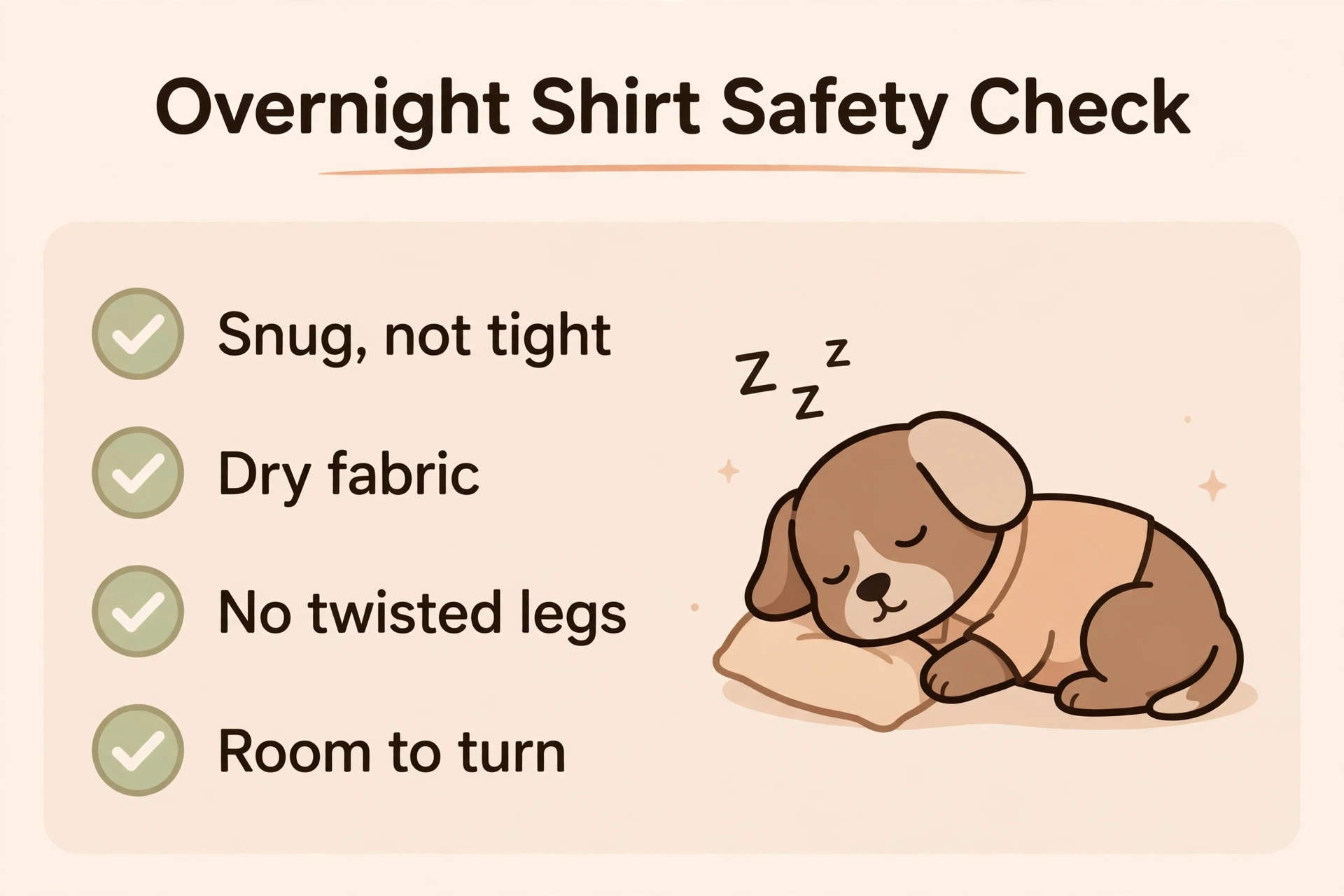
Do a hands on check at bedtime and again in the morning. Run a finger under the neck, chest strap and belly edge. Look for twisted fabric, a leg through the wrong opening, damp patches, or a closure that has loosened and could catch on bedding or a crate. Trim or secure any dangling strap. Remove the shirt if the dog is panting in a normal temperature room, seems unable to settle, or has scratched a red area. In the morning, check the skin under the shirt properly, not through the fabric. Look for redness, a rash, a sore over the spine or hips, matted damp coat, or a new lump you had not noticed. Regular hands on checks like this are also how owners find changes early, and VCA senior dog special considerations guidance encourages close attention to the many body systems that change with age.
Sleeping arrangements set the safety margin. A senior in a shirt should be able to stand, turn, lie fully on either side, reach water and signal a need to go out. Do not combine a new shirt with a new bed, a new room and visitors in the house on the same night, because if the dog is restless you will not know which change caused it. Dogs who chew clothing, dogs left entirely alone overnight in another building, and dogs with breathing difficulties need individual veterinary advice before overnight wear. For most healthy seniors the routine is simple. Shirt checked, toilet trip done, water available, room at a steady comfortable temperature, and a quick look in before you sleep. If you wake to pacing, do not assume the shirt failed or succeeded. Check pain, toilet need, temperature and confusion, in that order.
Soft Fabrics for Thin Skin and Sensitive Bodies
Senior skin tears, rubs and bruises more easily, so the inside of the shirt matters as much as the warmth rating on the label. Run your hand over every seam, label and closure before the dog wears a garment. Seams should lie flat, labels should be removable or placed where they cannot rub the neck, and velcro should have a soft backing so the hook side never touches skin or coat. Edges around the legs and neck should be bound or softly finished, not raw elastic that digs in when the dog curls up. A shirt that feels slightly rough between your fingers will feel much rougher after eight hours against a thin coat over bony shoulders.
Wash before first wear and keep the routine gentle. Use a mild detergent, rinse well, and avoid heavily scented products that linger in fleece and may bother a dog nose or sensitive skin. Inspect the shirt weekly for thinning fabric, a stretched neck, sharp velcro edges and seams coming open. Wash senior shirts more often than you washed a young dog coat, because older skin, minor dribbling and longer wearing hours add up, and a clean dry shirt is part of skin care. If a dog is recovering from an operation or a wound, clothing rules change completely and the garment must be the type your veterinarian approves, which is why post surgical dogs belong in best dog recovery suits after surgery rather than in a fashion fleece.
For a stretch fleece vest in a generous senior size, look for breathable four-way stretch that gives gentle, even contact, full underbody coverage, and no narrow straps or hardware over the spine, neck or belly.

Fit for a bony body is different from fit for a round young adult. Measure the chest at its widest point, the length from neck to tail base, and the neck loosely, then check the size guide for that specific garment rather than ordering by weight alone. A senior who has lost muscle may need a smaller chest size than expected but still need length for a long back. Between sizes, choose the option that does not restrict breathing and does not twist. Re measure after any noticeable weight change. A shirt bought for a comfortable dog in autumn can become tight after weight gain or dangerously loose after weight loss, and loose fabric is its own hazard because legs can tangle in it during the night.
When Warmth Is a Vet Conversation Instead
A shirt is comfort care, and some changes that look like feeling the cold are actually signs that need a diagnosis. Book a veterinary appointment when shivering is new, constant or happens in a warm room, when it comes with panting, drooling, weakness, a hunched back, crying out, or reluctance to bear weight, or when a dog who was coping suddenly is not. Shivering can be a pain response, a fever response, anxiety, low blood sugar or simple cold, and only an examination can sort those apart. The same applies to unexplained weight loss, a falling appetite, drinking or urinating much more, new lumps, bad breath with drooling, or a coat and skin change that arrives quickly. Senior screening exists for exactly this reason, to catch kidney, thyroid, heart, dental and joint problems while they are still manageable.
Night changes carry the same rule. New pacing, barking at nothing, house soiling in a previously clean dog, getting stuck in corners, or no longer recognising a familiar routine should be reported promptly, because pain, sensory loss and cognitive dysfunction can look alike at home and need different treatment. Do not increase compression to hold a restless dog still, and do not add supplements, pain medicines or human medication on the strength of an article. Bring notes instead. When the change started, what time of day it is worst, what the room temperature was, whether the dog ate and drank normally, and a short phone video of the shivering, stiffness or pacing will help your veterinarian far more than a general description. A warmer shirt may still be part of the answer after that visit. It simply stops being the whole answer.
Think of the shirt as a question you keep asking. Is my dog warmer, calmer and moving more willingly in this, or am I dressing a symptom I have not understood yet? The first answer means you have found a useful, kind layer for an older body. The second answer means it is time to pick up the phone. Both answers are good ownership. The mistake is only in not asking.
Our view
The best senior dog shirt is the one your dog forgets about. It opens wide so stiff legs are never forced, it feels soft against thin skin, it warms without cooking, and it survives your bedtime check without a single twist or rub. Buy for the body your dog has now, not the body they had at five, recheck the fit as that body changes, and let new shivering or restless nights start a veterinary conversation rather than a bigger shopping list. Warmth is a small kindness, done properly, every single night.
— The Pet Shirts
FAQ
Can a senior dog wear a shirt all night?
Many healthy senior dogs can, after the shirt has been tested during the day and checked at bedtime for fit, dryness and safe closures. Remove it if the dog pants, paces, chews at it, overheats or develops any redness, and ask a veterinarian first for dogs with breathing problems or skin wounds.
How tight should a calming wrap be on an older dog?
Gentle and even, with room to slide two fingers under the fabric at the neck and chest and no restriction on breathing. Senior bodies tolerate less pressure than young adults, so if you are choosing between two fits, choose the kinder one and watch whether the dog actually settles.
What is the easiest shirt to put on a dog with stiff legs?
A step-in design or a wrap that opens completely and fastens over the back. Both avoid lifting and bending legs through narrow sleeves. Dress the dog standing on a non slip surface and stop if any movement causes pain.
Does a fleece shirt help arthritis?
It can help a dog feel warmer and more comfortable, which may make moving a little easier, but it does not treat arthritis. Pain relief, weight control, suitable exercise and any other treatment should come from your veterinarian.
When should shivering in a senior dog worry me?
When it is new, constant, happens in a warm room, or arrives with weakness, panting, appetite change, weight loss, crying out or behaviour change. Shivering is not always cold, so a change like that deserves a veterinary appointment.
Questions about a shirt for your dog?
Browse our guides, compare fit advice, and choose slowly for the dog in front of you.
Sources
- American Kennel Club, Signs of Aging in Dogs
- American Kennel Club, Ways to Care for Your Senior Dog
- American Kennel Club, Osteoarthritis in Dogs
- American Kennel Club, How to Improve Your Senior Dog Quality of Life
- PetMD, Caring for Your Dog in Its Senior Years
- Cornell Riney Canine Health Center, Osteoarthritis
- Cornell Riney Canine Health Center, Cognitive Dysfunction Syndrome
- VCA Hospitals, Senior Dog Care and Special Considerations
- VCA Hospitals, Senior Pet Cognitive Dysfunction
- ASPCA, Expert Tips for Caring for Senior Pets
- MSD Veterinary Manual, Osteoarthritis in Dogs and Cats
- University of Illinois College of Veterinary Medicine, Senior Dogs Handout